
By Dan Haar, Hearst CT Insider Columnist
A House Built on Fraudulently Sold Land
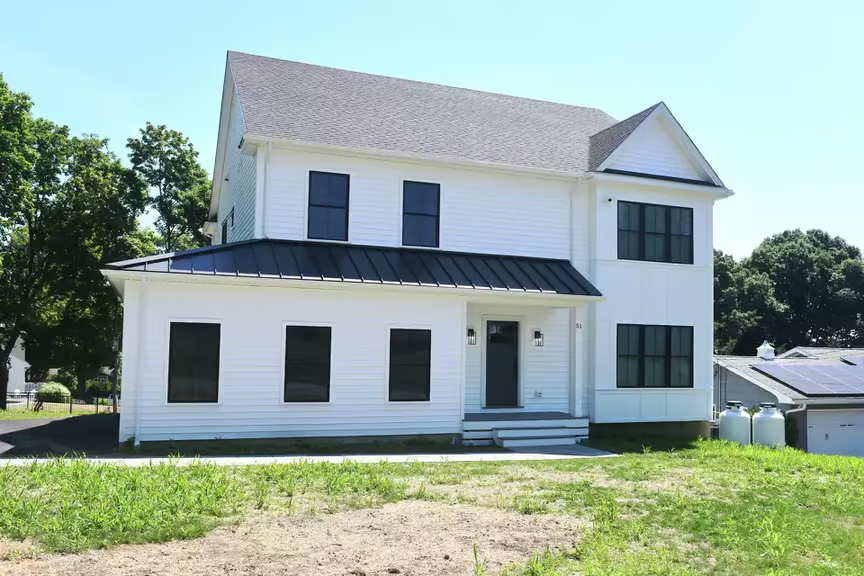
51 Sky Top Terrace, Fairfield, Conn. — July 3, 2024. That was the week a Connecticut couple bought the home for $1.45 million. The legal disputes involving the property wrapped up earlier in 2024, roughly 18 months after a scammer sold land they did not own.
So far, police and the FBI have announced no arrests.
Five months after the sale, investigators have reported no progress. The FBI has offered no updates, and many involved now believe the case may never be solved.
“I doubt the FBI will ever find them,” said Gina Leto. She is a partner at the development firm that built the home. The scam netted the criminals less than $300,000. “This is nothing to the FBI,” Leto said. “They’ve never contacted us.”
How the Seller Impersonation Fraud Unfolded
The case gained worldwide attention in the summer of 2023. That was when Dr. Daniel Kenigsberg discovered something shocking. A nearly finished house was listed for sale on land he owned and never sold. The asking price was just under $1.5 million.
The scam followed a growing pattern known as seller impersonation fraud. A title pirate convinced lawyers and real estate agents that they were Kenigsberg.
What made the situation even more unusual was timing. Local developers Gina Leto and Greg Bugaj built a home on the nearly half‑acre lot before Kenigsberg discovered what had happened. Kenigsberg is a Long Island doctor who grew up in the house next door to the parcel.
Fake Identity, Fake Sale, and Vanishing Money
The person pretending to be Kenigsberg told the seller’s lawyer that he had moved to South Africa. He provided fake identification and completed the sale in late 2022.
The scammers then routed the $350,000 proceeds to a bank account. That account later proved impossible to trace because it was created with false credentials.
Fairfield police initially investigated the fraud. They later turned the case over to the FBI. Police said the FBI had another case in Rhode Island that appeared to involve the same bank account or routing number.
The FBI has never publicly acknowledged an investigation into the Fairfield property. As is typical, the agency does not comment on open cases.
Lawsuits, Settlements, and a Clean Title
Today, everyone involved has largely moved on. Kenigsberg and the developers filed multiple lawsuits. The parties later combined them into a single negotiated settlement. The details remain confidential.
Leto and Bugaj have since started another project in Fairfield. They bought an older house and plan to tear it down to build a new one.
Fairfield land records show that on April 17 of this year, the developers paid $965,000 to Kenigsberg. In return, he provided a clean title to the property. That figure may reflect the settlement amount, but confidentiality rules prevent confirmation.
At first glance, it appears the developers paid nearly $1 million to repurchase land they believed they bought earlier for $350,000. In reality, insurance likely covered much of the cost.
Insurance Covered the Loss, Not Criminal Accountability
Several parties’ insurers likely contributed to resolving the dispute. These include Keller Williams, the brokerage involved in the original sale, and Anthony Monelli, the Trumbull attorney who represented the seller. The title insurer CATIC also played a role, along with legal counsel for the developers.
None of these individuals or companies is suspected of wrongdoing.
Fairfield police report no new developments. Kenigsberg has said he remains frustrated by the lack of answers. However, experts warned early on that digital fraud cases can be nearly impossible to solve once time passes.
A Cautionary Tale for the Real Estate Industry
The house sold in late June for $1.45 million. The buyers were the same Connecticut couple who had originally agreed to pay $1.475 million. They waited through a legal battle unlike anything they had seen.
As a result of this case, professionals across the real estate industry have become more cautious. Seller impersonation attempts are rising nationwide. This Fairfield case became a clear example of the risks tied to title pirates.
Anthony Monelli now speaks with industry groups about preventing similar scams.
No Closure, Only Lessons Learned
If the FBI announces a break in the case, it will surprise Gina Leto. She spent more than a year worrying about a four‑bedroom home stuck in legal limbo.
“I think they’ve filed that away,” she said. “I don’t think it’s active anymore.”
Original article: https://www.newstimes.com/news/article/no-arrest-in-fairfield-land-scam-19949847.php