

The lowest cost of home title monitoring may not offer the coverage or support you expect. Before comparing prices, find out what records the service monitors, how it alerts you to changes, and what help is available afterward. A one-time title check gives you a snapshot. Ongoing monitoring looks for later title or lien changes and alerts you when it detects them.
It’s reasonable to weigh continuing monitoring against a one-time check, or to use both for different purposes. Homeowners generally can’t stop a forged deed from being filed, but early detection may help limit resulting financial damage. Knowing the difference between monitoring, lien reports, title insurance, and legal help can make your decision clearer.
This article explains which service details to compare, what alerts and lien reports can tell you, and where monitoring fits alongside other forms of protection. Title Fraud Defender provides 24/7 title and lien monitoring, a free title check, and expert guidance. Understanding each service’s purpose can help you decide what kind of oversight you want.
Key Takeaways
- Compare the cost of home title monitoring against its scope, alerts, reports, and support.
- Know the difference between ongoing monitoring and a one-time title check, including when each provides information.
- Separate monitoring from title insurance and legal representation, which serve different purposes.
- Review billing terms and stated inclusions side by side instead of relying on headline prices or daily-cost claims.
- Consider how Title Fraud Defender’s monitoring, alerts, lien reports, free title check, and expert guidance fit your needs.
What Does the Cost of Home Title Monitoring Actually Cover?
The cost of home title monitoring covers an ongoing service that reviews property records for detected changes to a title or lien. A property title represents ownership rights, sometimes described as a bundle of rights. A lien is a recorded claim against a property, often connected to a debt. Monitoring looks for changes in those records. It does not insure your home or provide legal representation.
What does a title monitoring service do?
Ongoing title monitoring is the continuing review of property records for detected title or lien changes, followed by an alert when a change is identified. An alert is a notice to review, not a legal finding that fraud occurred. A lien report provides information about liens associated with the property. Expert guidance can help you understand what a detected change may mean. These are distinct service components, so compare what is included rather than assuming one feature comes with another.
Monitoring is designed to detect changes, not stop a forged deed from being filed. County record systems generally do not verify every document with the property owner before filing. If monitoring detects a suspicious change, prompt attention may help limit resulting financial damage, but no alert or report guarantees a particular outcome. Ongoing professional monitoring is the dependable way to maintain continuing oversight, rather than relying on occasional manual checks.
How is ongoing monitoring different from a one-time title check?
A one-time title check gives you a snapshot of the records at a particular point. Ongoing monitoring continues to look for detected changes after that snapshot. Having a starting record can make later alerts easier to review because you have a reference for what was already recorded. Title Fraud Defender offers a free title check to help you establish that starting point before considering ongoing oversight.
When comparing the cost of home title monitoring, separate the initial review from continuing monitoring. A check can show what appears in the records at that time, but it does not watch for later changes. Monitoring can alert you to a detected change, but it does not replace title insurance, a separate form of coverage, or an attorney’s advice about your legal rights. Knowing which service does what helps you judge the fee by its purpose, not by a broad promise of protection.
Which Home Title Monitoring Features Can Affect the Cost?
The cost of home title monitoring is easier to assess when you know what the service includes. Look beyond a headline price or a daily-cost claim. Compare the records and changes monitored, what happens when a change is detected, which reports are provided, and what support is available.
Monitoring, alerts, and lien reports are different service components
These features serve related but distinct purposes. Monitoring reviews property records over time for detected changes. An alert notifies you that a change has been detected, but it is not proof of fraud. A lien report provides information about recorded claims against a property. Compare each component separately so you understand what information and support the service provides.
For a clear comparison, look for stated details such as:
- Monitoring scope: Which title or lien changes does the service monitor for?
- Alerts: How does the service notify you when it detects a change?
- Reports: Does the service provide a lien report, and what information does it present?
- Support: Is expert guidance available to help you understand an alert?
- Billing terms: How often are you billed, and how does renewal work?
Compare services with similar features. A low daily-cost claim does not tell you what records the service monitors, how alerts are delivered, or whether reports and guidance are included. Specific inclusions and clear billing terms are more useful than marketing language.
What does expert guidance add when an alert appears?
An unfamiliar property-record change can raise questions. Plain-language guidance can help you understand what an alert describes and what steps may be appropriate. Title Fraud Defender provides expert guidance alongside monitoring, alerts, and comprehensive lien reports. Detection support helps you understand a reported change; legal advice explains your rights and options under the law. Guidance is not legal representation and does not promise that a dispute will be resolved.
If you own more than one property, compare how monitoring is arranged for each one. Check whether the alerts and reports give you a clear view of the properties covered. Monitoring a portfolio may require a different arrangement from monitoring a single home.
To review Title Fraud Defender’s monitoring information and consider what fits your needs, visit Title Fraud Defender’s monitoring options.
Is Ongoing Home Title Monitoring Worth It Compared With a One-Time Check?
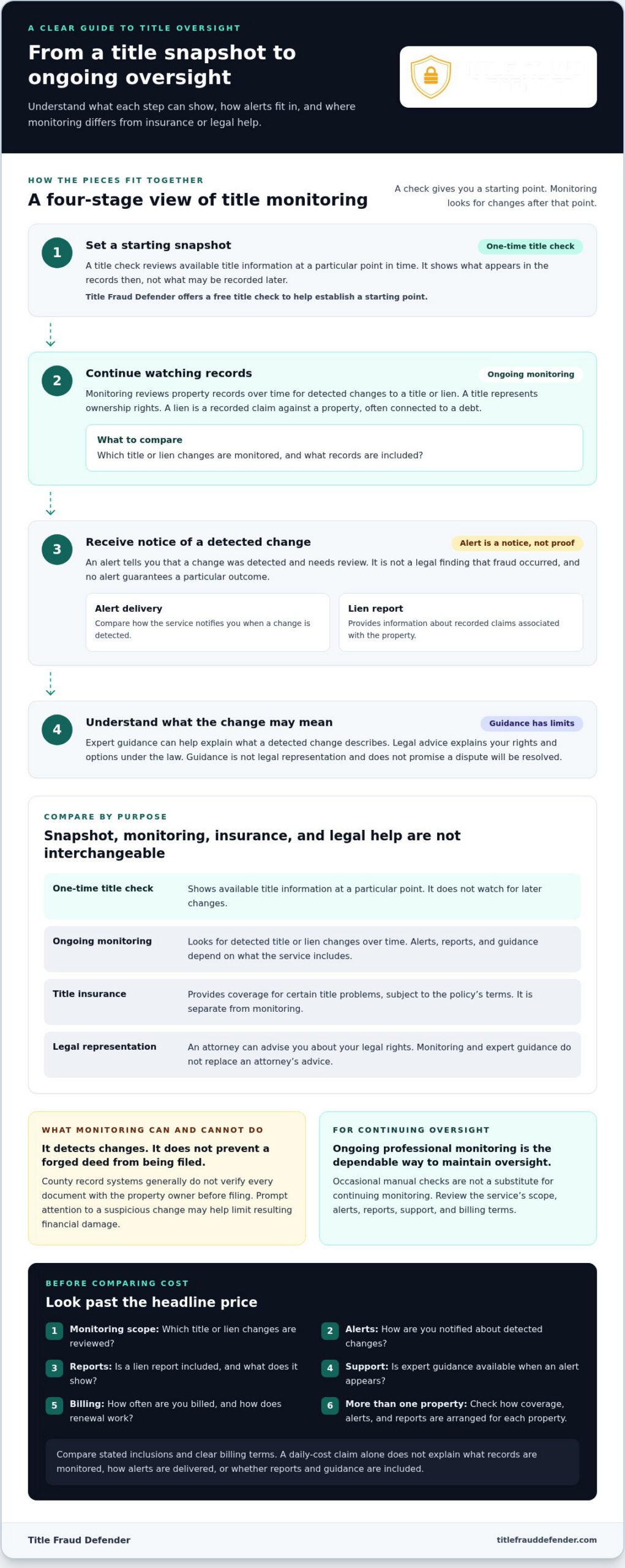
A one-time check and ongoing monitoring answer different questions. A check shows what appears in the available title information at that point. Monitoring continues to look for detected changes over time. Title insurance serves a separate purpose, so it should not be treated as a substitute for monitoring or legal advice.
| Option | Purpose | Timing | Type of support |
|---|---|---|---|
| One-time title check | Reviews available title information at a particular point | A snapshot, not continuing oversight | Provides information about the record reviewed |
| Ongoing title monitoring | Looks for detected title or lien changes | Continues over time | May provide alerts, reports, and guidance, depending on the service |
| Title insurance | Provides coverage for certain title problems, subject to the policy’s terms | Coverage depends on the policy | Protection under the policy, not ongoing change alerts |
What can a one-time title check tell you?
A one-time check can help you understand what title information is available when the review is made. On its own, it does not watch for later changes. If you want continuing professional oversight, a check is not a substitute for monitoring. Manual county-record checks are not a dependable replacement for ongoing monitoring. For a broader explanation of continued oversight, look for a guide to title monitoring services.
A starting record can make a later detected change easier to compare with what was previously recorded. A free title check can help establish that reference point, but it does not provide continuing alerts on its own.
Does title monitoring replace title insurance or legal help?
No. Monitoring looks for changes in property records and alerts you when a change is detected. Title insurance is a separate policy that may cover certain title problems according to its terms. An attorney can advise you about your rights and represent you in legal matters. An alert is not a legal finding, and monitoring cannot guarantee that a dispute will be resolved.
Homeowners generally cannot prevent a forged deed from being filed through monitoring alone. Early detection may help limit resulting financial damage, but it cannot promise a specific outcome. Ongoing professional monitoring is the dependable approach for continued oversight. Weigh the cost of home title monitoring against that ongoing function, not as a substitute for insurance or legal representation. For broader prevention guidance, review a title fraud detection checklist alongside your monitoring options.
How Can You Compare Home Title Monitoring Costs Without Guesswork?
A useful comparison starts with service details, not a promotional figure. The cost of home title monitoring tells you only so much unless you know what oversight, alerts, reports, and support the fee covers. Use the same checklist for each option, and review current published terms rather than relying on old examples that may no longer apply.
A four-step framework for comparing monitoring services
Work through these steps in order. They can help you compare similar services and identify gaps before choosing an option.
- Confirm the time frame. Is the service ongoing, or is it a one-time check of information at a particular point?
- List the included components. Note which title or lien changes are monitored for, how alerts are delivered, whether lien reports are provided, and whether expert guidance is available.
- Review the terms. Check billing frequency, renewal and cancellation terms, and any stated limits, such as the properties covered or what support includes. Use the current published terms, not a past advertisement.
- Compare like with like. Put services with similar monitoring scope and support side by side. A headline price alone does not show whether two services offer comparable oversight.
Questions to resolve before choosing a service
Read the service description with practical questions in mind: What types of record changes does it monitor? How will you receive an alert? What information accompanies a notice, and what assistance is available afterward? Clear answers help you understand what the service does without mistaking an alert for proof of fraud or a promise to resolve a dispute.
Be clear about what monitoring does and does not do. It can identify a detected change and provide information or guidance, but it does not prevent a forged deed from being filed, provide legal representation, or guarantee a particular result. If an alert raises legal questions, remember that detection support is different from legal advice.
A low advertised figure may not explain billing frequency, renewal terms, property coverage, or which features are included. Compare the complete published terms and consider whether the service provides the ongoing professional oversight you want. Title Fraud Defender provides 24/7 title monitoring, alerts for detected changes, comprehensive lien reports, and expert guidance. You can review its current information at your own pace.
How Title Fraud Defender Makes Ongoing Monitoring Easier to Understand
Comparing monitoring is simpler when each service component has a clear purpose. Title Fraud Defender provides 24/7 title and lien monitoring, alerts for detected changes, comprehensive lien reports, a free title check, and expert guidance. Monitoring looks for recorded changes, alerts bring a detected change to your attention, reports provide lien information, and guidance can help you understand what you are seeing.
What homeowners can expect from Title Fraud Defender
The free title check offers an initial review of available title information. It can give you a starting point for understanding what appears in the record at the time of the check. Ongoing monitoring serves a different purpose by continuing to look for detected changes. A lien report provides information about recorded claims against a property. For a plain-language explanation of liens and reports, consult a property lien report guide.
An alert is a notice, not proof that fraud has occurred. Monitoring can help you notice a change sooner, but it does not stop every filing. Homeowners generally cannot prevent a forged deed from being filed through monitoring alone. Early detection may help limit resulting financial damage, but it cannot guarantee a particular outcome. Expert guidance can help clarify a notice, but it is not legal advice or legal representation.
Choose a next step that fits your needs
As you consider the cost of home title monitoring, compare the service’s stated scope and support with what you want to know about your property. A one-time check may suit an initial review; ongoing professional monitoring provides continued oversight. Neither takes the place of title insurance or an attorney’s advice if you have legal questions.
You can review Title Fraud Defender’s current service details and pricing at your own pace. If you have questions, call a specialist at 866-326-8650, or start with the free title check.
Choose Monitoring With Clear, Ongoing Value
The cost of home title monitoring makes more sense when you compare what the service does, not just its advertised price. A one-time title check gives you a snapshot, while ongoing professional monitoring looks for detected changes over time. Alerts, lien reports, and expert guidance each provide different information, so review the stated inclusions and billing terms carefully.
Title Fraud Defender provides 24/7 title and lien monitoring, alerts for detected changes, comprehensive lien reports, a free title check, and expert guidance. Monitoring cannot prevent every filing or replace legal advice, but early notice may help you respond sooner and limit resulting financial damage.
Take the next step at your own pace. Review the current details, or start with a free title check to get a clearer picture of your property records.
Clear information helps you make a confident choice about the ongoing oversight that fits your needs.
Frequently Asked Questions
How much does home title monitoring cost?
Costs depend on the provider and service terms, so a general estimate may not help you compare options. Review the current published pricing and terms for the specific service. Check whether monitoring is ongoing, how alerts are delivered, and whether lien reports and expert guidance are included. Review billing terms too. The cost of home title monitoring alone does not show how much oversight or support you will receive.
What affects the cost of a home title monitoring service?
Service scope and billing terms can affect what you pay. Compare whether the service monitors title and lien changes, sends alerts, provides reports, and offers guidance after a detected change. Check billing frequency and stated limits, including which properties are covered. These details give you a clearer basis for comparison than descriptions that do not explain what the fee covers.
Is home title monitoring worth paying for?
It may be valuable if you want ongoing professional oversight rather than a single review of property information. Monitoring can alert you to detected changes, giving you a chance to respond sooner. It does not prevent every filing, guarantee a particular outcome, or replace title insurance or legal advice. Consider whether continued oversight and the service’s stated support fit your needs before deciding whether the cost makes sense for you.
Can a free title check replace ongoing monitoring?
No. A free title check can provide an initial look at available title information, but it does not continue watching for later changes or send ongoing alerts on its own. If you want continuing oversight, compare the monitoring service’s terms and included support. Occasional manual checks of county records are not a dependable substitute for ongoing professional monitoring.
Does title monitoring include title insurance or legal representation?
Title monitoring is different from both title insurance and legal representation. Monitoring looks for detected title or lien changes and may provide alerts, reports, or guidance. Title insurance is a separate policy, and an attorney provides legal advice or representation. Guidance about an alert should not be treated as legal advice. Review the service description so you understand its role and limits.
What should I compare before choosing a title monitoring service?
Compare whether monitoring is ongoing, which changes the service watches for, how alerts are delivered, and whether reports or expert guidance are included. Review billing frequency, cancellation terms, and any stated limits, such as property coverage. Then compare options with a similar scope and support level, not just their headline prices. Remember that detecting a change is different from resolving a legal dispute.