


What if a notice about a loan you never applied for, or an unexpected change in your property records, is more than a paperwork mix-up? These signs of home title theft deserve attention, but they aren’t proof that someone has taken ownership of your home.
It’s understandable to worry about your home equity and the time it could take to address a fraudulent filing. Respond calmly, verify what changed, and keep a record of the information you receive. A warning sign is a reason to investigate, not a reason to assume the worst.
This guide explains which notices and unexpected changes may signal a problem, what to do if you suspect title fraud, and how to organize useful details as you seek help. Title Fraud Defender provides 24/7 title and lien monitoring, with alerts for detected changes. Monitoring can help you learn about changes earlier, but it can’t prevent a forged document from being filed.
Key Takeaways
- Recognize signs of home title theft in unfamiliar ownership documents, financial notices, or official correspondence, but treat them as reasons to verify, not proof of fraud.
- Understand what an unexpected notice can and cannot establish before drawing conclusions.
- If a change seems suspicious, preserve the notice, note relevant dates, and seek clarification from the appropriate official office and professionals.
- Ongoing title and lien monitoring can alert you to detected changes earlier, but it cannot prevent a fraudulent filing.
- Respond calmly and keep useful information organized if a warning sign appears.
What counts as home title theft, and how can it happen?
Your home is the physical property. Its title is the record of who legally owns it and what interests may be attached to it. Home title theft is an unauthorized attempt to change or use those ownership records, often by presenting documents that falsely appear to come from the owner.
Home title theft is an unauthorized effort to alter or use ownership records, while a routine record update reflects a legitimate transaction or correction. That distinction matters. An unfamiliar document deserves attention, but its presence alone doesn’t establish that a transfer was valid or that you’ve lost ownership.
Property records can change for legitimate reasons, such as a completed transaction or an administrative correction. If a notice or filing is unfamiliar, find out what it describes and whether it relates to an action you recognize. Signs of home title theft are reasons to seek clarification, not conclusions about what happened.
How a fraudulent deed may affect a home title
A deed is a document used to record a transfer of property ownership. For a plain-language overview, see What is a Deed? In a possible fraud, someone may impersonate an owner or use a forged signature on a deed, then submit it for recording. The filing could be part of an attempt to sell the property or borrow against its equity, but neither outcome should be assumed from a document alone.
County offices generally record documents rather than verify the identity of every person who submits them. A suspicious document may therefore enter public records without proving that the person named or signing it had authority. A recorded change is a reason to act promptly and clarify the filing with the relevant official office and appropriate professionals.
Why early awareness matters to homeowners
Keep notices and related correspondence, and note when you received them. If you’re unsure what a record means, seek qualified guidance rather than treating it as proof of fraud or ignoring it.
Questions about your home can feel deeply personal. A suspected filing may raise concern about your equity and create stress, particularly if you rely on your home as a source of stability. Early awareness gives you a clearer starting point for asking questions and responding. Ongoing professional monitoring can alert you to detected title or lien changes, but it cannot prevent a forged deed from being filed.
What are the signs of home title theft to watch for?
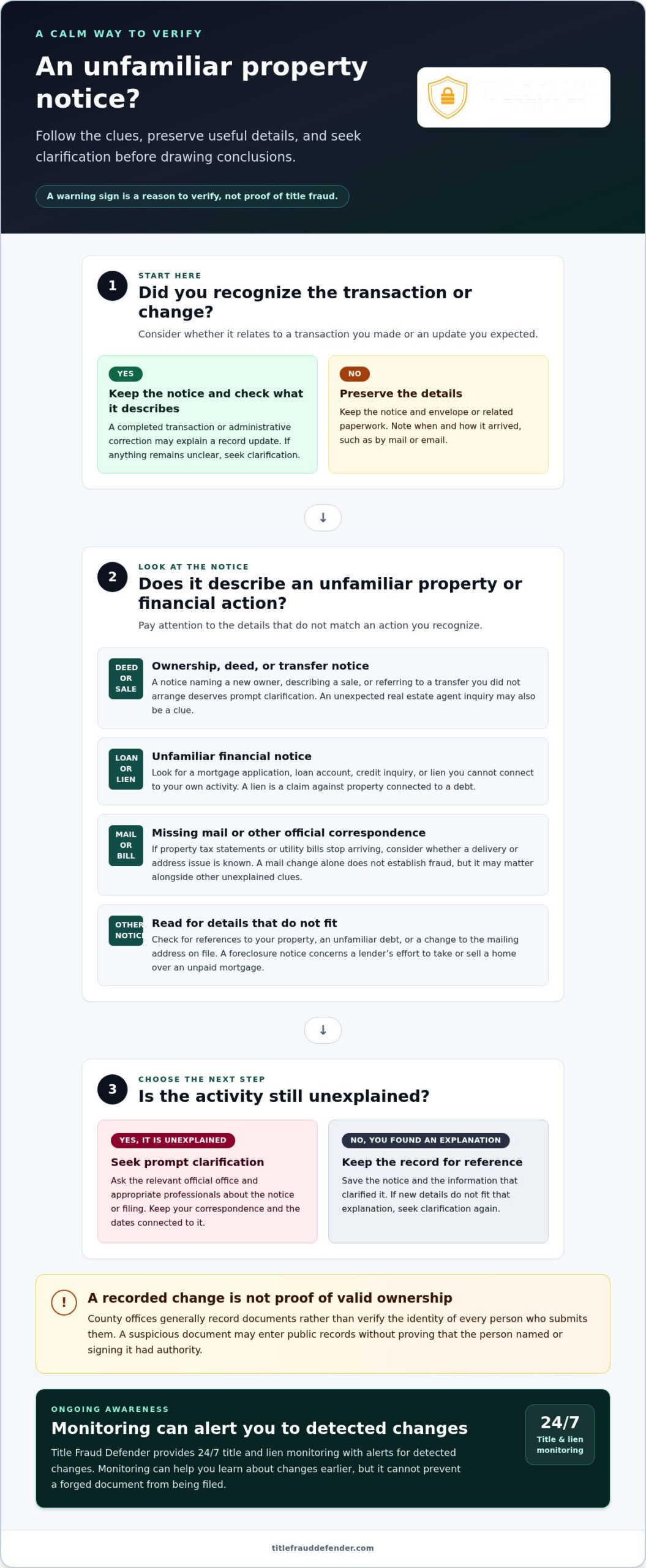
Signs of home title theft can appear in ownership paperwork, financial notices, or changes in the mail you usually receive. Look for information that doesn’t match a transaction you made or recognize. A routine correction, processing delay, or mailing error can also cause an unexpected notice, so focus on what it says and whether you can connect it to a known event.
Several clues can justify attention, but none alone confirms theft. A notice is a prompt to verify the details, not proof that you’ve lost ownership. Pay particular attention to a document that names a new owner or describes a transfer you didn’t authorize.
Unfamiliar deed, ownership, or transfer notices
Watch for correspondence about a deed, ownership change, or property transfer that you don’t recognize. A deed records a transfer of ownership, so a notice naming a new owner or describing a sale deserves prompt clarification. Keep the notice, its envelope, and any related paperwork. Note when and how it arrived, such as by mail or email.
- Ownership records: A document or notice refers to an owner, transfer, or sale you did not arrange.
- Unexpected real estate contact: An agent asks about listing or selling your home when you haven’t put it on the market.
An unfamiliar name or transaction detail may reflect an error or another issue. Don’t assume the notice is genuine or fraudulent based on appearance alone. Treat it as a reason to ask the appropriate official office for clarification, especially if it describes a recorded change.
Unexpected loan, lien, or property-related mail
Financial correspondence can offer another clue. A lien is a claim against property connected to a debt. A notice about a loan, mortgage, or lien you didn’t apply for may warrant attention. So may a foreclosure notice, which concerns a lender’s effort to take or sell a home over an unpaid mortgage, if you believe your payments are current.
- Loan or credit notices: Look for unfamiliar mortgage applications, loan accounts, or inquiries you can’t connect to your own activity.
- Missing or redirected mail: If property tax statements or utility bills stop arriving, consider whether there’s a known delivery or address issue. A change in mail alone doesn’t establish fraud, but it may matter alongside other unexplained clues.
- Other official correspondence: Read notices carefully for references to your property, an unfamiliar debt, or a change in the mailing address on file.
Keep the original correspondence and note what seems inconsistent. Don’t share personal or financial information with an unexpected caller until you’ve independently verified who they are. For ongoing awareness of detected title and lien changes, explore Title Fraud Defender’s monitoring options. Monitoring can alert you to changes, but it cannot stop a filing from occurring.
Does a warning sign prove someone stole your home title?
No. A warning sign is information that deserves follow-up, not a legal finding that someone changed your ownership. An unfamiliar notice, credit alert, or claim about your property may indicate a problem, but it could also result from an error, a delay, or a transaction you don’t recognize yet. Don’t conclude that your home has been stolen based on one item alone.
Use each clue as a prompt to verify the details through appropriate official channels and, when needed, qualified professionals. Signs of home title theft are more concerning when separate pieces of information point to the same unexplained activity. Even then, a pattern calls for prompt clarification, not an assumption of proof.
Warning signs versus confirmed title changes
A warning sign raises a question. Reliable documentation and appropriate official or professional guidance can help clarify what a document means and whether it affects your ownership. Look for precise details, such as the property involved, the action described, and the date. If those details don’t match anything you authorized, preserve the information and seek clarification.
| Observed warning sign | What it can or cannot establish |
|---|---|
| A notice names a new owner or describes a transfer you don’t recognize. | It may indicate a recorded change or a notice sent in error. The notice alone doesn’t establish that the transfer is valid or that ownership was lost. |
| You receive a loan or lien notice for an account or debt you don’t recognize. | It could signal unfamiliar financial activity, but the correspondence alone doesn’t prove that a lien was placed on your property or that title fraud occurred. |
| A foreclosure-related notice arrives despite your understanding that your mortgage is current. | It deserves prompt clarification. The notice itself doesn’t explain why it was sent or prove that a fraudulent title change caused it. |
| Property-related mail stops arriving or appears to have been redirected. | A mail change may have several explanations. On its own, it doesn’t confirm that anyone altered your ownership records. |
Why mail, credit, and property information can be confusing
Correspondence may arrive late, go to an outdated address, contain incorrect information, or relate to activity you don’t immediately recognize. Credit information can raise questions about an unfamiliar inquiry or account, but it doesn’t by itself confirm a property-record change. Check details through a trusted channel rather than relying only on a caller’s explanation or an unexpected message.
Compare the clues. Does the notice identify your property? Does it describe an action you authorized? Do separate documents refer to the same unfamiliar event? Consistent details can make prompt follow-up more important, but they still don’t prove fraud. Keep copies and note what remains unclear. Then ask the relevant official office or an appropriate professional to help interpret the information.
What should you do after noticing a possible title-theft sign?
Stay calm, but don’t set the notice aside. An unfamiliar document or financial message is a reason to verify what happened, not proof that your title has been changed. These steps can help you organize the details and reach the right people safely.
Preserve notices and organize what you know
Keep the original letter, email, or document, along with its envelope or any related pages. Make copies before sharing anything. Write down when it arrived, how you received it, the names or organizations mentioned, and any reference numbers or contact details. A clear record can help you explain your concern and avoid relying on memory later.
- Protect your information. Don’t provide Social Security numbers, account details, passwords, or copies of identity documents to an unexpected caller or through contact details in a message you haven’t verified. For businesses and property professionals handling sensitive client records, partnering with cybersecurity specialists like cyberone.security can help defend against credential theft and unauthorized access through managed detection and response.
- Check the source independently. If a loan or lien notice names a financial institution, find its contact information from a source you already trust, then ask whether the notice relates to an account or property transaction.
- Keep a record of follow-up. Note whom you spoke with, when you contacted them, and what they said. Save any new correspondence with the original notice.
Seek appropriate help without assuming the outcome
If you have reason to believe a suspicious document was recorded, contact the relevant county recording office using independently verified contact information. Ask what the document represents and what information is available about it. The office can clarify its records, but no single call or report guarantees that a filing will be reversed.
Contact the named lender or financial institution directly about an unfamiliar loan, lien, or mortgage notice. If you suspect identity theft, you can report it to the Federal Trade Commission at IdentityTheft.gov. For questions about ownership rights or legal remedies, consult a qualified real estate attorney. An attorney can advise you on legal options for your circumstances.
Title Fraud Defender provides expert guidance about title and lien changes, but it does not provide legal representation. If you’re unsure where to start, call a specialist at 866-326-8650. Ongoing professional monitoring can alert you to detected changes. Occasional do-it-yourself record checks leave gaps and shouldn’t be relied on as ongoing protection.
How can 24/7 title monitoring help you spot changes earlier?
Property records can change before you become aware of them. Ongoing professional monitoring checks your property’s title and lien status continuously and can alert you to detected changes. Earlier awareness gives you a chance to review unfamiliar activity and take appropriate steps before it leads to further financial harm.
For continued awareness of title and lien changes, ongoing professional monitoring is the only dependable protection. Title Fraud Defender provides 24/7 monitoring with alerts for detected changes. Monitoring cannot stop a forged deed from being filed or guarantee a particular outcome, but an alert can give you an earlier opportunity to respond. It is a monitoring service, not title insurance or legal representation.
What an alert can and cannot tell you
An alert tells you that a title or lien change was detected. It is a prompt to review the details, not proof of a crime or a legal decision about ownership. A legitimate transaction, an error, or another record issue may also need clarification. Compare the information with what you recognize, keep the alert, and contact the relevant official office or an appropriate professional if the change is unfamiliar.
Occasional record checks can leave gaps between a change appearing and you noticing it. Ongoing monitoring provides continued awareness, while you remain responsible for reviewing an alert and deciding what follow-up is appropriate. Earlier notice gives you more opportunity to address a concern, though it cannot guarantee that financial harm will be avoided.
A measured first step for older homeowners
Protecting your home equity matters at every age. If you’re a senior homeowner, you deserve clear information and the freedom to make decisions based on your circumstances. Title Fraud Defender offers expert guidance to help you understand detected changes. For information relevant to older homeowners, explore senior homeowner title protection.
A free title check can be a practical starting point if you want more clarity about your property’s title. You can also call a specialist at 866-326-8650 with questions. Signs of home title theft deserve attention, but checks and alerts provide information, not a guarantee against fraud or a substitute for legal advice.
Make your next step a clear one
Uncertainty about your home can weigh on you. You don’t have to decide what an unfamiliar record means on your own or assume the worst. Treat signs of home title theft as a reason to seek clarity, keep useful information close, and make decisions based on verified details.
Protecting your home equity is an ongoing responsibility, not a one-time task. Consider what would help you feel informed over time, and choose a next step that fits your needs. A free title check can offer a starting point, while professional monitoring can help maintain awareness of detected changes. Neither replaces official clarification or legal advice when those are needed.
Stay attentive, ask questions when something doesn’t add up, and give yourself time to confirm the facts. A calm, informed response puts you in a stronger position to protect what you’ve worked hard to build.
Frequently Asked Questions
Can home title theft happen while you still have a mortgage?
Yes. An active mortgage doesn’t, by itself, establish that no unauthorized activity can affect property records. If a notice refers to a loan you don’t recognize, compare its details with your mortgage paperwork and contact the named lender using contact information you locate independently. Ask whether the account or transaction is associated with your property. Keep a record of the lender’s response and any reference details they provide.
Is a paid-off home automatically more at risk of title theft?
No. A paid-off home isn’t automatically at greater risk, and mortgage status alone can’t tell you whether a property is being targeted. If you own your home outright, you may receive fewer routine mortgage statements, so pay attention to other property-related correspondence. Focus on specific, unexplained information rather than making assumptions based on whether you have a mortgage.
Can a homeowner receive no notice when a fraudulent deed is recorded?
Yes. A notice may not reach you promptly, so receiving no correspondence isn’t a reliable way to confirm the status of your ownership records. Make sure organizations that send property-related mail have your current mailing address. Ongoing professional monitoring can provide an additional way to stay informed through alerts about detected changes.
Does homeowners insurance cover home title theft?
Coverage depends on the wording of your homeowners policy, so don’t assume it covers a fraudulent ownership transfer or related legal expenses. Review the policy’s coverage and exclusions, then ask your insurer about any unclear terms. Title insurance is a separate product from homeowners insurance and from monitoring. For a coverage decision, rely on your policy documents and qualified advice, not a general explanation of title fraud.
What happens if a fraudulent deed is recorded against a home?
The consequences depend on the specific document and circumstances. A deed in public records may raise questions about an ownership claim or a transaction involving the property, but the document alone doesn’t explain its legal effect. Avoid making decisions based on a general description or an unfamiliar caller’s claims. A qualified real estate attorney can review the deed and explain how it may relate to your situation.
Can home title theft be reversed after a fraudulent filing?
Possibly, but there’s no single outcome or timeline that applies to every case. The available options depend on the documents, the facts, and the processes that apply to your situation. Gather the relevant paperwork and seek advice from a qualified real estate attorney about possible remedies. An attorney can assess your circumstances, explain what steps may be available, and help you understand what to expect.
If you’d like a clear starting point, begin with a free title check from Title Fraud Defender, or call a specialist at 866-326-8650.