


Can someone really steal your house by changing a deed? House stealing usually refers to deed or title fraud, when someone files forged documents that make property records appear to transfer ownership without your knowledge. That filing is serious, but it doesn’t automatically mean you’ve lost your home.
It’s understandable to worry when an unfamiliar name or notice appears in a property record. County recording offices may record documents without confirming the filer’s identity or whether the transaction is legitimate. You may not be able to stop a forged filing before it appears, so spotting a suspicious change and responding promptly matters.
This guide explains what house stealing means, how an attempted title change differs from losing ownership, and what to do if a record looks wrong. You’ll also learn how ongoing professional monitoring can alert you to detected title or lien changes. Monitoring can help you learn about a change sooner, but it cannot prevent every filing or determine whether a document is legally valid.
Key Takeaways
- House stealing can refer to forged deeds, unauthorized title changes, or fraudulent liens. Learn what these records may mean for your property.
- A suspicious filing deserves prompt attention, but it does not by itself settle who legally owns the home.
- If a notice or alert concerns you, preserve it and write down what you saw and when before taking further steps.
- Ongoing professional monitoring can alert you to detected title or lien changes, but it cannot prevent every filing.
- Expert guidance may help you understand a concerning property record and decide what to do next.
What Does House Stealing Mean for Your Home and Property Title?
Finding an unfamiliar filing tied to your home can be unsettling. The phrase house stealing usually describes property-related fraud involving ownership records, not someone physically taking your house. It may refer to a forged deed, an unauthorized change to title records, or a fraudulent lien, which is a claim against the property connected to a debt.
A suspicious filing deserves attention, but it does not automatically prove that you have lost your home or that a transfer is legally valid. The meaning and consequences depend on the document, the circumstances, and how the matter is resolved. An improper record could complicate your ownership rights or put home equity at risk.
House stealing, deed fraud, and title fraud: what is the difference?
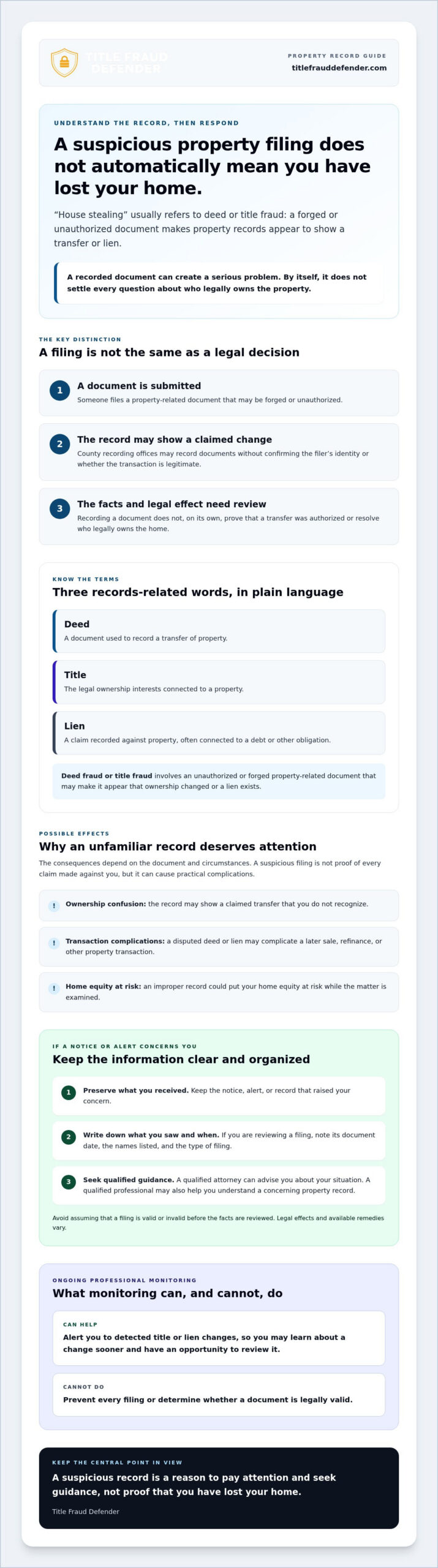
A deed is a document used to record a transfer of property. Title means the legal ownership interests connected to a property. Deed fraud or title fraud occurs when someone submits an unauthorized or forged property-related document that may make it appear that ownership has changed or that a lien exists.
These terms overlap, but they describe different parts of the issue. The deed is a document. The title is the ownership record or interests the document may affect. A broader legal term, fraudulent conveyance, refers to an improper transfer of property. Whether a particular filing is fraudulent, and what effect it has, depends on the facts and applicable law.
County offices may record documents without confirming the identity of the person filing them or verifying that a transaction is legitimate. As a result, homeowners usually can’t prevent a forged deed from being filed. Recording a document, however, is not the same as resolving every question about who legally owns the property.
Why the phrase can sound more frightening than the process
“House stealing” can suggest an immediate, final loss. In practice, there’s a difference between an attempted fraudulent transaction, a document appearing in property records, and a legal decision about ownership. A filing may create serious complications even when it is disputed. You may need to respond to questions about ownership, liens, or your home equity while the facts are examined.
Stay calm, but don’t ignore an unfamiliar record or notice. Preserve what you received and seek qualified guidance about next steps. If you’re looking for information tailored to older homeowners, read this guide to senior property protection.
How Can a Fraudulent Deed or Lien Affect a Property?
A possible sequence starts when someone submits an unauthorized or forged document related to a property. A county office may record a filing without asking you to approve it or verifying the filer’s identity and the transaction. The public record may then show a claimed transfer or a lien, even though the document or claim is disputed.
A fraudulent filing can create a serious records problem without proving every claim against the homeowner. A recorded document can cause confusion about ownership or complicate a later sale, refinance, or other property transaction. The specific consequences depend on the document and circumstances. A record change alone does not settle every legal question about who owns the property.
What a deed filing can show, and what it cannot establish alone
A deed filing can show that someone has claimed a property transfer. It does not, by itself, prove that the transfer was authorized or that the person named in the document legally owns the home. If you see a filing you don’t recognize, take note of the document date, the names listed, and the type of filing, but avoid assuming the outcome before the facts are reviewed. Legal effects and available remedies vary, so seek advice from a qualified attorney about your situation.
For additional background on deed fraud and ways landowners can protect themselves from it, see the guidance from Ohio State University Extension.
How a lien can add another layer of concern
A lien is a claim recorded against property, often connected to an unpaid debt or other obligation. An unfamiliar lien could be an error, a legitimate claim you don’t recognize, or a sign of possible fraud. Its appearance deserves review, not an immediate conclusion. Keep any notice or record you received, and ask a qualified professional how to verify the claim and understand your options.
A disputed deed or lien can create practical obstacles while you work to understand what happened. Ongoing professional title and lien monitoring can alert you to detected changes, giving you an opportunity to review them and respond. It can’t stop every filing or determine whether a document is legally valid. To learn about ongoing title monitoring, review the information from Title Fraud Defender.
Does a Suspicious House Title Change Mean You Have Lost Your Home?
No. A suspicious change in a property record is serious, but it doesn’t, by itself, answer every question about who legally owns your home. House stealing is often used to describe fraudulent activity involving property records. A recorded document may raise a dispute, but the filing alone doesn’t establish that it is valid or that you have lost your ownership rights.
It helps to separate three things: a recorded claim, a suspected forgery, and a legal resolution. A recorded claim is a document or lien appearing in property records. A suspected forgery is a concern that the document was filed without proper authorization. A legal resolution is a determination of the dispute through the appropriate process. The steps and outcomes can vary by state and by the facts involved.
Why a recorded document is not the end of the story
A filing can put a property record in question without proving that the document is genuine, authorized, or legally effective. For example, an unfamiliar deed may appear to show a transfer, but that appearance alone doesn’t resolve whether the transfer was valid. How a county office, court, lender, or potential buyer responds can depend on the circumstances. Avoid assuming either that the filing has no effect or that it settles ownership.
If a record appears inaccurate or unauthorized, keep the notice or alert and note when you received it. Then seek advice from a qualified attorney familiar with property matters in your state. An attorney can review the documents and explain options that fit your situation. Title monitoring and expert guidance can help you notice and understand a change, but they aren’t legal representation.
Why early awareness can make a practical difference
Prompt awareness gives you a chance to gather information and seek guidance before a records issue creates further complications. Stay calm and focus on clear steps. Preserve relevant notices, record what you observed and when, and share sensitive information only through appropriate private channels with qualified professionals.
Early detection can give you more time to respond, but it cannot guarantee a particular legal resolution or prevent every financial loss. Ongoing professional title and lien monitoring can provide continuing alerts about detected changes. It does not stop every filing or decide whether a document is valid.
For practical steps to help identify warning signs, review this guide to senior property protection. If a record has already raised a concern, use the information as a starting point, then seek qualified advice about your specific circumstances.
What Should You Do If You Suspect Someone Is Stealing Your House?
An unfamiliar deed, lien, or title alert can be alarming. Take it seriously, but don’t assume it proves someone owns your home or that you must act on a demand immediately. A calm, documented response can help you and qualified professionals assess what the record shows and what steps may fit your situation.
First steps after an unfamiliar deed, lien, or title alert
Start with the information in front of you. Use this sequence to preserve details and avoid rushed decisions:
- 1. Save the notice or alert. Keep the original message, document, envelope, and any related communications. Note what you saw and when you received it.
- 2. Confirm the source independently. If a notice or caller seems unexpected, use a contact method you find separately, rather than relying only on a phone number or link in the message.
- 3. Don’t share sensitive details publicly. Keep account information, personal identifiers, and property documents private. Share relevant records through appropriate channels with qualified professionals.
- 4. Pause before signing or paying. Don’t sign documents or pay an unexpected demand until you’ve had the situation reviewed by a qualified professional.
- 5. Ask about the record and your options. Contact a qualified real estate attorney, and ask the relevant county recording office how to raise a concern about a property filing. County systems may record documents without verifying the filer’s identity or asking you to approve the filing first.
Who can help assess the situation?
A qualified real estate attorney can review the documents, advise you about your rights, and explain potential remedies. Procedures and legal options vary, so ask how they apply to your circumstances. The recording office can explain its process for reporting or questioning a record, though it may not be able to determine whether a document is legally valid.
Title Fraud Defender provides expert guidance and can help you understand alerts about detected title or lien changes. That guidance is not legal representation, so consult an attorney for advice about your legal rights. Occasional do-it-yourself searches of county records provide only a snapshot, not continuing alerts. Professional monitoring can notify you of detected changes, giving you an opportunity to review them and seek guidance, without guaranteeing a particular outcome.
If you’re concerned about house stealing but don’t know where to begin, Title Fraud Defender offers a free title check as a first step.
How Ongoing Title Monitoring Helps Detect House Stealing Early
Finding a suspicious filing months after it appears can leave you with less time to understand what happened. A one-time search offers a snapshot of property records, but it can’t provide continuous oversight. For ongoing awareness, professional monitoring can alert you to detected title and lien changes.
Monitoring doesn’t prevent every filing or guarantee that fraud will be stopped. It can alert you to detected changes, so you have an opportunity to review an unfamiliar record and seek guidance sooner. Early notice may give you more time to address a records issue, but it can’t guarantee a specific outcome.
Manual record searches versus ongoing professional monitoring
An occasional manual search only shows what you find at the time you perform it. A later search may reveal a change, but it can’t alert you when that change is detected. County recording systems may also accept a filing without asking you to approve it or verifying the filer’s identity.
Professional monitoring works differently. It checks for detected title or lien changes and sends alerts. An alert is a reason to review the information, not proof that a filing is fraudulent or legally valid. You may still need to confirm the record and consult a qualified attorney about your rights and next steps.
What Title Fraud Defender does, and what it does not do
Title Fraud Defender provides 24/7 title and lien monitoring, alerts about detected changes, lien reports, and expert guidance. This ongoing oversight can help you become aware of a possible issue sooner than an occasional search might. It doesn’t stop every filing, establish legal ownership, or guarantee recovery of property or losses.
Title Fraud Defender provides monitoring, not title insurance or legal representation. If an alert raises concerns about house stealing, use it as a prompt to review the details and, when appropriate, speak with a qualified real estate attorney. Monitoring can support early awareness, but legal questions require legal advice.
If you’d like to check your property title, you can start with a free title check from Title Fraud Defender or call 866-326-8650 to speak with a specialist.
Stay Informed and Take the Next Step
House stealing usually refers to fraud involving property records, not someone physically taking your home. An unfamiliar deed or lien is a serious reason to act, but it doesn’t alone determine who legally owns the property. Save the notice, document what you observed, and seek qualified legal advice if a record appears unauthorized.
Because a filing may be recorded without your approval, occasional manual searches can’t provide ongoing oversight. Title Fraud Defender offers 24/7 title and lien monitoring with alerts for detected changes, plus expert guidance. Monitoring can help you learn about a change sooner, but it doesn’t prevent every filing or guarantee a legal outcome. It’s also not title insurance or legal representation.
If you’d like a clearer picture of your property records, start with a free title check from Title Fraud Defender.
Stay attentive, keep important notices, and get qualified help when something doesn’t look right. A measured response can help you move forward with greater clarity. While title and deed monitoring safeguard your property records, homeowners who also want to protect their physical residence can explore Security System Installation and Monitoring for complete peace of mind.
Frequently Asked Questions
Is house stealing a real crime?
“House stealing” is a common phrase for property-related fraud, not necessarily the name of a specific legal offense. It can describe conduct such as forging a deed or filing an unauthorized property document. Whether the conduct violates criminal or civil law depends on the facts and applicable state law. If you suspect fraud, preserve any notice or record and speak with a qualified real estate attorney about your situation.
Can someone steal your house by filing a fake deed?
Someone may file a forged deed that appears to show a transfer, but the filing alone doesn’t prove the transfer is valid or that the filer legally owns your home. County recording offices may record documents without confirming the filer’s identity or asking you to approve the filing. If you see a deed you don’t recognize, keep the details and contact a qualified real estate attorney promptly.
What happens if someone records a deed in your name without permission?
An unauthorized deed filing can create confusion in property records and may complicate a sale, refinance, or other transaction. It does not, by itself, settle who legally owns the home. Save the notice or document details, note when you learned about the filing, and ask a qualified real estate attorney what steps may apply. You can also ask the relevant recording office how to raise a concern about the record.
How can you tell if someone has stolen your house deed?
An unfamiliar deed, transfer notice, lien, or alert about a property-record change may warrant review, but it doesn’t prove fraud on its own. Ongoing professional title and lien monitoring can alert you to detected changes. Occasional manual searches do not provide continuing alerts. If you receive an alert, preserve it, verify unexpected messages through a trusted contact method, and ask a qualified attorney to assess records that appear unauthorized.
Can someone sell a house using a forged deed?
A person may attempt to market or transfer a property using forged documents, but an attempted transaction does not automatically establish a valid sale or transfer of ownership. The legal effect depends on the documents and circumstances, and outcomes can vary by state. If you learn of a possible sale or transfer you didn’t authorize, keep related communications and promptly consult a qualified real estate attorney. For legitimate real estate buyers, thorough due diligence—combining clear title searches with physical property evaluations from regional professionals like Anchorpoint Inspection Services—helps verify all aspects of a property before closing.
Does title monitoring prevent house stealing?
No. Title monitoring can’t stop every document from being filed, and it doesn’t guarantee that fraud or financial loss will be prevented. It can alert you to detected title or lien changes, giving you an opportunity to review them and seek guidance sooner. Title Fraud Defender provides 24/7 title and lien monitoring, alerts, lien reports, and expert guidance. Its service is not title insurance or legal representation.