



What if a document could change the public record for your home before you knew it had been filed? Deed theft happens when someone uses a forged or unauthorized deed to make it appear that ownership has changed. County recording offices may accept documents that meet filing requirements without verifying the signer’s identity, so you usually can’t stop a forged deed from being recorded.
It’s understandable to worry about losing control of your home or the equity you’ve built. But a suspicious record doesn’t mean you should assume the worst. Finding a change early can give you more time to respond and may help limit further financial harm.
This article explains how deed theft can happen, what to do if a deed or title change seems unauthorized, and how ongoing professional monitoring can help you spot changes sooner. Monitoring won’t prevent a filing, but it can alert you to a detected change so you can take informed next steps.
Key Takeaways
- Deed theft involves a fraudulent or unauthorized deed filing that can affect the public record of who owns a property.
- A recorded document does not, by itself, prove that a rightful transfer took place.
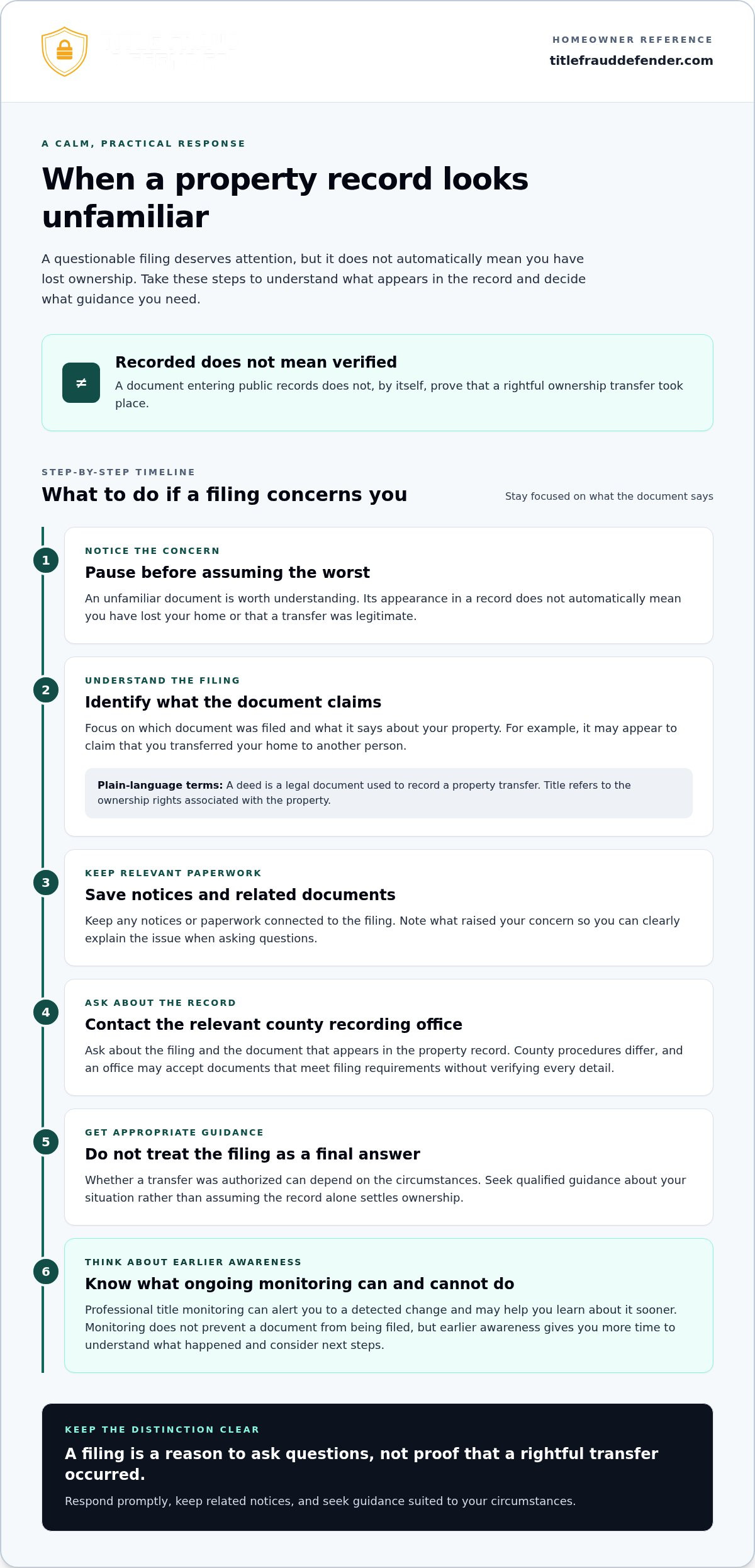
- If a record seems wrong, note what raised concern, keep related notices, and contact the relevant county recording office to ask about the filing.
- County systems may not verify every detail of a submitted document, so homeowners usually can’t rely on them to stop every forged filing.
- Ongoing professional title monitoring can help you detect changes sooner, giving you more time to respond and limit potential harm.
What Is Deed Theft, and What Could It Mean for Your Home?
Seeing an unfamiliar document connected to your home can be unsettling. It does not automatically mean you have lost ownership, and an unusual record may have an explanation. Still, it’s worth understanding what the document says and why it appears in the property records.
A deed is a legal document used to record a transfer of property. Title refers to the ownership rights associated with that property. For a basic explanation of how deeds are used to document property transfers, see What is a Deed?
Deed theft is an unauthorized or fraudulent deed filing that makes it appear in public records that a property’s ownership has changed. That filing is not the same as proof that a rightful transfer occurred. Its meaning and effect depend on the circumstances and may require qualified guidance to assess.
How deed theft differs from a missing deed
Losing your paper copy of a deed does not, by itself, transfer ownership or change the property record. The concern is different when someone submits a deed or related paperwork involving your property without your knowledge or authorization. For example, an unfamiliar filing might claim that you transferred your home to another person. The record deserves attention, but the filing alone does not establish that the transfer was legitimate.
Why an unauthorized filing can feel personal
Your home may represent years of savings, a source of stability, and plans you’ve made with family. A questionable ownership record can raise immediate worries about equity, housing security, and what might happen next. Those concerns are understandable, particularly if you’re planning to pass the home to loved ones or rely on its value later in life.
A suspicious record does not mean you must leave your home or that someone has automatically taken control of it. The public record is one part of a complicated ownership question. Take time to understand what was filed and get appropriate guidance rather than treating the document as a final decision about your rights.
Older homeowners may have additional concerns, including protecting a long-held home and keeping family plans on track. Title Fraud Defender’s guidance for senior homeowners addresses issues that can matter as you consider protecting property ownership later in life.
The distinction is simple: a misplaced piece of paper is a document problem; an unauthorized filing is a property-record concern. Knowing which situation you’re facing can help you respond calmly and focus on the right next step.
How Can Someone Commit Deed Theft Through Property Records?
The broad pattern is straightforward: someone uses false or unauthorized information to present a deed as if a property transfer had been approved. The person named as the signer may not know the document exists or that it has been submitted. A filing can then appear in public property records as part of the property’s history.
County recording practices vary. A recorder’s office may review documents for filing requirements, but homeowners usually can’t rely on county systems to verify every detail or prevent every forged document from being filed. The key distinction is this: a recorded document shows that paperwork entered the public record, not that the ownership transfer has been verified as legitimate.
What a forged or unauthorized deed filing involves
Forgery means making or using a document that falsely appears to be genuine or authorized. In a suspected property-record scheme, the submitted paperwork may wrongly represent that an owner agreed to a transfer. You might not learn about it when it is filed. You don’t need to understand how documents are created or submitted to recognize the concern: an unfamiliar filing involving your property deserves careful attention.
Why the recorded deed and ownership question are not identical
Public records can show that a document was filed without resolving every question about whether it is valid. If the named owner disputes the signature or authorization, the record alone may not explain what happened or settle the disagreement. The facts and applicable processes can depend on the circumstances, so avoid treating a filing as a final answer about ownership.
For a broader overview of how these schemes may involve forged or fraudulent documents, the New York Attorney General’s Deed Theft: How It Happens and What Homeowners Can Do guide offers useful background. Its information is specific to that office’s guidance, so procedures may differ elsewhere.
If a record involving your home looks unfamiliar, focus first on understanding what document was filed and what it claims. Keep any notices or related paperwork, and seek qualified guidance about your situation. The distinction between a document appearing in a record and a transfer being legitimate is important, but the record should still be addressed promptly.
To get a clearer picture of your property’s title, start with Title Fraud Defender’s free title check. It can be a practical first step as you consider ongoing detection and the questions you may want to raise next.
Can County Records Stop Deed Theft Before a Filing?
Usually, you can’t rely on county recording systems to stop every forged deed from being filed. A county office may process a document that meets its filing requirements without verifying every detail, including whether the person named as the signer truly authorized the transfer. Procedures and requirements differ by jurisdiction, so no single description applies to every county.
Preventing a document from entering the record is different from detecting a change after it appears. Homeowners generally can’t control how a county reviews each submission. Earlier awareness, however, can give you more time to understand what happened and seek appropriate guidance.
Why recording a document does not guarantee it was authorized
Recording means a document has been added to the public property records. It doesn’t, by itself, confirm that every statement in the document is accurate or that the owner approved it. A record may therefore raise a question that still needs to be examined. The county’s process can vary, so don’t assume that a document’s presence is proof of authorization.
County records can show that a filing exists, but the presence of a document and the truth of its claims are separate issues. If you’re concerned about a specific record, the relevant county office can explain its process and what information is available.
Why early detection matters more than occasional checking
Finding an unfamiliar change sooner can give you more time to gather related documents, ask questions, and seek qualified guidance. It may also help you act before the change leads to further financial harm. Detection doesn’t prevent a filing or guarantee a particular outcome, but prompt awareness can be valuable.
Occasional searches leave a gap between the day a record changes and the next time you look. They are not dependable ongoing protection. Ongoing professional monitoring is the dependable way to watch for title changes over time. Title Fraud Defender provides 24/7 title and lien monitoring with instant alerts for detected changes. Monitoring can help you spot a change, but it can’t stop a forged filing from occurring.
If you’re an older homeowner considering how ongoing oversight fits your circumstances, guidance for senior homeowners can help you think through property-protection concerns that may be especially relevant later in life.
If you’re unsure where your title stands, Title Fraud Defender’s free title check can be a straightforward first step. A specialist can also offer expert guidance at 866-326-8650. Ongoing monitoring, rather than occasional self-checks, helps keep attention on detected changes over time.
What Should You Do If You Suspect Deed Theft?
An unfamiliar filing can be alarming, but you don’t have to decide on your own what it means. Focus on preserving information and getting appropriate guidance. A record may raise questions about your property, but it doesn’t automatically settle your ownership rights or show exactly what happened.
Gather the information connected to the suspicious change
Start by writing down what prompted your concern. Note when you first learned about the document and what you saw, such as a notice, letter, or unfamiliar name connected to the property. Keep the original items when possible, and make copies of notices, correspondence, and property documents related to the issue. A clear record of what you received and when can help you explain the situation.
Don’t alter or discard anything that may relate to the filing. You don’t need to investigate the matter alone or repeatedly search public records. Preserve what you already have and prepare useful details for the people who can help interpret them.
Get appropriate help without delaying
Contact the relevant county recording office to ask how to obtain information about the document and understand the office’s process. Procedures differ, so ask about the specific filing rather than assuming the same steps apply everywhere. Keep a note of whom you spoke with and any instructions or information they provide.
For questions about your legal rights or possible remedies, speak with a qualified attorney. An attorney can assess the circumstances and explain options that may apply to your situation. If you need support gathering evidence or looking into suspected fraud, private investigation agencies like canadianinvestigations.com can also help uncover key details. Don’t rely on general information alone to make decisions about a specific ownership dispute.
Title Fraud Defender provides expert guidance related to title concerns, but it isn’t a law firm and doesn’t provide legal representation. Its guidance can help you understand title-related information and consider what questions to raise. That role is different from an attorney’s advice about your rights or a legal dispute.
As you gather information, keep the focus on clarity: identify the document, preserve related communications, and learn what the county record shows. Acting promptly can help you seek guidance sooner and may help limit further financial harm. It can’t guarantee a particular outcome, but an organized response gives you a clearer starting point.
If you’re an older homeowner, Title Fraud Defender’s guidance for senior homeowners may help you consider property concerns relevant to your circumstances. A free title check can also be a useful first step.
How Ongoing Title Monitoring Helps Detect Deed Theft
Protecting your home title isn’t a one-time task. Property records can change after you last reviewed them, so an ongoing way to notice changes is more useful than relying on memory or occasional checks. Professional title monitoring provides continued oversight and prompts you to pay attention when activity involving your property is detected.
This kind of monitoring is for detection, not prevention. It can’t stop every document from being filed, determine whether a change is fraudulent, or guarantee that financial harm won’t occur. Its value is helping you become aware of a change and consider what to do next.
What a title-monitoring alert can help you notice
An alert can draw your attention to a detected change in your title or lien status. A lien is a recorded claim against a property, often related to a debt. If you receive an alert about a change you don’t recognize, use it as a reason to review the information and ask questions. An alert isn’t, by itself, proof that deed theft or another form of fraud has occurred.
Some changes may have an explanation; others may need closer attention. Reviewing the details can help you decide whether to contact the county recording office or seek qualified advice. Monitoring helps surface an issue for review, but it doesn’t resolve a dispute or replace legal advice or insurance.
A practical first step for concerned homeowners
If you want to understand your property’s current title status, a free title check can provide a starting point. Title Fraud Defender also offers expert guidance to help you understand title-related concerns. A one-time review and ongoing oversight serve different purposes: one can help you get oriented, while monitoring helps you stay aware of detected activity over time.
You don’t need to wait until you have a specific concern to consider how you want to keep track of your property. If a change does appear, having a clear starting point can make it easier to ask focused questions and decide whether you need legal advice. Monitoring supports awareness, not a guaranteed result.
Make Title Awareness Part of Your Homeownership Plan
Your home is part of the life you’re building and the plans you’re making for the future. Give property oversight a place in those plans, just as you would other important household matters. Decide who in your family should know where key ownership documents are kept and who can help you review an unexpected property notice.
A simple, shared plan can reduce uncertainty if a question comes up later. Keep important records organized, and make sure a trusted family member knows how to locate them if needed. These steps can help you feel more prepared and keep decisions grounded in clear information.
Protecting the home you’ve worked hard for starts with an informed choice. Move forward at a pace that feels right for you.
Frequently Asked Questions
Can someone steal your house deed while you still live in the home?
Yes, someone may submit a fraudulent document involving your property even while you live there. The concern is not someone taking the paper copy from your home. It’s an unauthorized filing that may create a misleading entry in property records. Your continued presence in the house doesn’t, by itself, show whether a filing is legitimate. If a document seems unfamiliar, preserve it and get guidance before drawing conclusions.
Does deed theft mean someone can immediately sell your home?
No, an unauthorized filing does not automatically mean another person can lawfully sell your home or that you must leave. A person may attempt to use false ownership information, but an attempt and a valid sale are not the same. If you learn that someone is trying to market or transfer your property, keep any messages or notices and seek prompt legal advice. Don’t assume the record alone settles who owns the home.
Can a forged deed be removed from property records?
Possibly, but the process for challenging or correcting a record depends on the facts and the jurisdiction. A county recording office can explain what information it maintains and how to obtain documents. It may not be able to resolve a dispute about whether a deed is valid. A qualified attorney can review the circumstances, explain possible remedies, and advise you about steps that may apply to your case.
Is deed theft the same as mortgage fraud?
No. Deed theft concerns an unauthorized or fraudulent document that affects property ownership records. Mortgage fraud involves deception connected to a mortgage or other lending transaction, such as false information used to obtain financing. The issues can overlap if a suspicious property transfer is connected to borrowing, but they are not interchangeable terms. Identify what document or transaction raised concern, since that helps determine what kind of guidance you need.
Can homeowners prevent a forged deed from being recorded?
Usually, you can’t depend on county recording systems to stop every forged deed before it is filed. Review practices differ, and a submitted document may be recorded without every detail being verified. You can’t treat a recording office as a guaranteed barrier. Ongoing professional title monitoring is the dependable way to watch for detected changes over time. It supports earlier awareness, but it doesn’t prevent a filing or guarantee a particular outcome.
Does homeowners insurance cover deed theft?
Coverage depends on the terms of your specific homeowners policy. A standard policy may not address disputes over who owns a property, but coverage varies, so don’t assume that a suspicious deed filing is covered or excluded without checking the policy language. Contact your insurer with questions about your coverage. Insurance questions are separate from determining whether a filing is valid, which may require advice from a qualified attorney.
Can deed theft affect a home that has no mortgage?
Yes. A home without a mortgage can still be affected by an unauthorized deed filing because the issue concerns recorded ownership information, not only an existing loan. Having no lender does not automatically prevent someone from submitting a suspicious document. If you receive an unfamiliar notice or discover a change involving the property, keep the related paperwork and seek guidance. Monitoring title and lien changes can help you notice a detected change sooner.
For a practical next step, start with Title Fraud Defender’s free title check, or call a specialist at 866-326-8650.