

Article by
George McCleary
CEO, Title Fraud Defender
Identity theft protection monitors risks tied to your personal information, while title monitoring tracks changes to property records. When comparing identity theft protection vs title monitoring, choose based on what you want watched: your identity, your property title, or both. Neither type of monitoring can stop every kind of fraud.
It makes sense to want a clear safeguard when both your home and financial identity are at stake. Monitoring can help you spot warning signs sooner, but an alert does not prevent fraud or undo every consequence.
This guide explains what identity monitoring can detect, how title monitoring differs, and where each has limits. You’ll learn which option fits your main concern and why monitoring property records may matter even if you already monitor your identity.
Key Takeaways
- Choose identity monitoring for risks tied to your personal information, and title monitoring for changes connected to your property records.
- Learn what credit and identity alerts can reveal, and where they may leave gaps in your protection.
- If you spot a suspicious title change, preserve the records and take prompt steps to address the potential fraud.
- See how ongoing title monitoring and a free title check can help you focus on protecting your home equity.
Identity theft protection versus home title fraud coverage
Identity theft protection and title monitoring watch different risks. Identity theft can involve a stolen Social Security number, a new credit account, or misuse of an existing credit card. A data breach may expose personal details that criminals later use to impersonate you. The FTC received more than 1.1 million identity theft reports in 2024, showing the range of concerns consumers face.
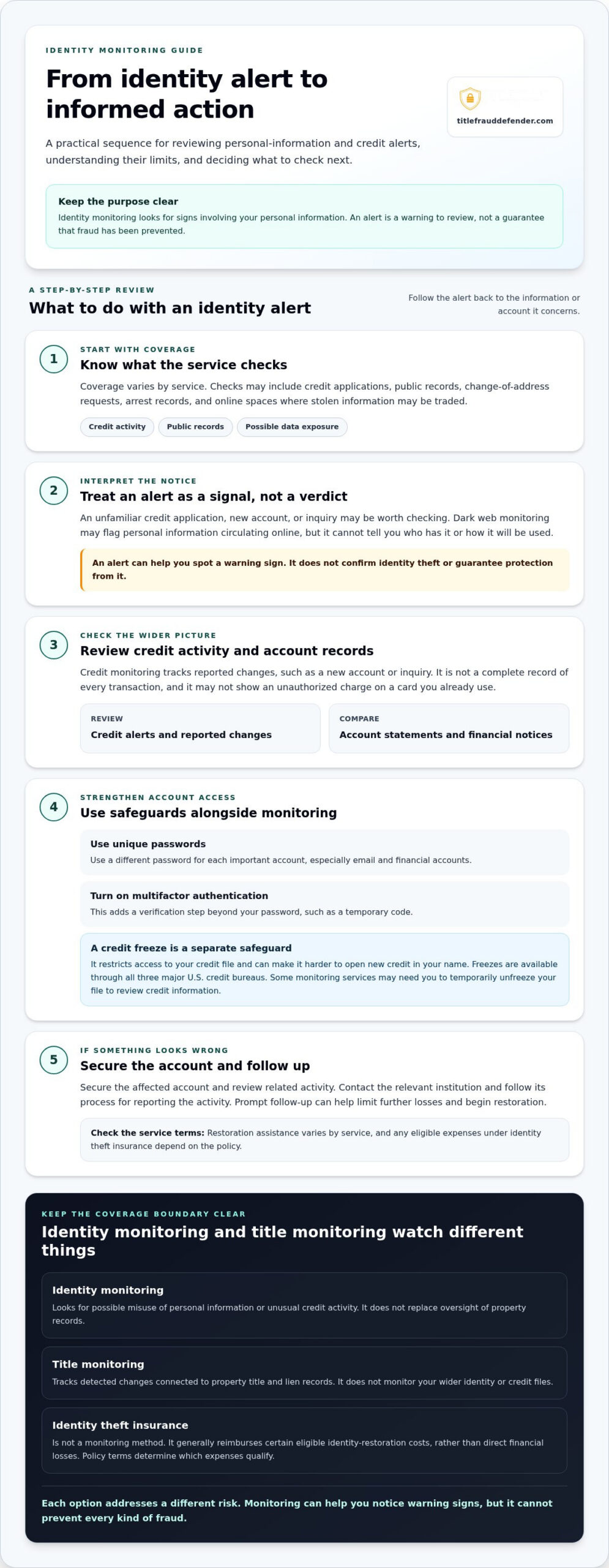
Protection services may monitor credit files, personal information, or online sources. Dark web monitoring looks for signs that stolen information is circulating where it may be traded. Credit alerts can help you detect an unfamiliar account, but they do not cover every type of fraud. For example, credit monitoring may not flag an unauthorized charge on a card you already use.
Home title fraud targets property records rather than your credit profile. A criminal may use false documents to try to change ownership or place a lien, a recorded claim against the property. If an unauthorized change goes unnoticed, it can threaten home equity and lead to a stressful dispute. Title monitoring focuses on changes to title and lien records, not broader identity activity.
Identity theft insurance is different from monitoring. It generally reimburses certain out-of-pocket costs for restoring your identity, rather than covering direct financial losses. The policy terms determine which expenses qualify. Title monitoring, by contrast, alerts you to detected property-record changes. It is not theft insurance or general identity protection.
| Option | Main focus | What it may detect | Key limit |
|---|---|---|---|
| Identity protection | Personal information and credit | Possible misuse of your details or unusual credit activity | Monitoring detects warning signs; it doesn’t prevent every fraud |
| Title monitoring | Property title and lien status | Detected changes connected to your property records | It does not monitor your wider identity or credit files |
| Identity theft insurance | Eligible restoration expenses | It is not a monitoring method | Coverage generally does not reimburse direct financial losses |
Choose based on the asset you want monitored. If you’re concerned about a stolen identity or unfamiliar credit activity, identity monitoring may fit. If you want to track recorded changes affecting your home, title monitoring addresses that specific risk. The two serve separate purposes, so neither replaces the other.
Identity monitoring
Identity monitoring watches for signs that someone is using your personal information. Depending on the service, checks may cover credit applications, public records, change-of-address requests, arrest records, and websites where stolen data is traded. For example, an unfamiliar credit application can signal that someone is trying to open an account in your name. An alert gives you a chance to investigate and respond.
Credit monitoring is one part of identity protection. It tracks changes in your credit files and can alert you to activity such as a new account or inquiry. Credit bureaus maintain those files, but a credit alert is not a complete record of every transaction. It may not reveal a fraudulent charge on a card you already hold. Review alerts alongside account statements and notices from your financial institutions.
Dark web monitoring looks for personal information in online spaces where stolen data may be offered or exchanged. A breach can expose details that criminals might later use. For context, the Change Healthcare data breach affected 100 million people. Monitoring can flag possible exposure, but it cannot guarantee protection against identity theft.
- Credit alerts: Review new accounts, inquiries, and other reported changes.
- Identity checks: Look for unusual use of personal details in public or online records.
- Recovery support: Check whether coverage includes restoration assistance if you need help correcting identity records.
A credit freeze is a separate safeguard. It restricts access to your credit file, which can make it harder for someone to open new credit in your name. Freezes are available at all three major U.S. credit bureaus. If you freeze your files, some identity theft protection services may need you to temporarily unfreeze them to review credit information. Weigh that access against the monitoring features you want.
Keep up your own review routine, too. You can access free weekly credit reports from all three major credit bureaus through AnnualCreditReport.com. Compare unfamiliar accounts and inquiries with your records. If something looks wrong, contact the relevant institution and follow its process for reporting the activity. Prompt follow-up can help limit further losses and begin restoration.
Monitoring is useful for alerts, not a guarantee against identity theft. Its coverage depends on which information sources the service checks and what restoration help it includes. If your main concern is your home’s recorded ownership, identity monitoring does not replace separate oversight of property records. Guidance for senior homeowners can help you consider that distinct risk.
Limits of identity theft prevention
Personal information can be exposed in ways a monitoring service cannot control. A data breach, deceptive email, or reused password may give someone access to an account. Dark web monitoring may find exposed details, but that does not reveal who has them or how they will be used. Treat an alert as a reason to secure the affected account and review related activity.
Strengthen account access directly. Use a unique password for each important account, especially email and financial accounts. Turn on multifactor authentication, which requires an additional verification step beyond your password. For example, signing in may require a temporary code. These steps reduce the usefulness of a stolen password, but they cannot remove information already exposed in a breach.
Credit reports and fraud alerts have distinct roles. A fraud alert asks a lender to verify your identity before opening credit. It does not prevent the lender from approving an application. A credit freeze restricts access to your credit file and can help prevent new credit from being opened in your name. You may need to lift the freeze when applying for credit yourself.
Choose safeguards that fit the risk. If you receive a notice about an unfamiliar account, contact the named lender through a trusted channel and ask how to dispute it. If an account password may be compromised, change it directly with the company and update any other accounts that use the same password. Keep copies of notices and record your follow-up dates.
- Secure access: Replace reused passwords and enable multifactor authentication.
- Control credit access: Consider a freeze if you do not expect to apply for credit soon.
- Respond to alerts: Confirm unfamiliar applications with the lender and preserve its response.
- Track recovery: Keep a record of calls, documents, and dispute outcomes.
Identity recovery can take sustained effort. Correcting records and resolving accounts may take months or over a year, depending on the number of institutions involved and the documentation required. Keep correspondence in a secure folder and note each institution’s next steps. A clear record helps you track open disputes and retain important details during a lengthy recovery.
Safeguards have limits beyond credit files. Someone may misuse personal information without applying for credit or target property records instead. Match your safeguards to the information and assets you want monitored. Credit protections address credit-file risks, while other records tied to your identity or home need separate attention.
What steps should you take if you discover fraudulent activity on your home title?
An unfamiliar deed, ownership change, or lien in property records deserves prompt attention. A lien is a recorded claim against a property, often connected to a debt. Do not assume a notice is accurate or harmless. Keep the notice and record when and how you received it.
Take things in order. Preserve evidence, understand the recorded change, and alert the people who can respond. A county recording office can explain how to obtain the document associated with a filing, but it cannot replace legal advice about correcting a disputed record.
- Save the evidence. Keep the alert, letter, email, or other notice that raised concern. Record the date, sender, and property address. Save related messages and avoid altering original files. A clear timeline can help you explain what you discovered.
- Get the recorded document. Contact the county office that maintains property records. Ask how to obtain a copy of the deed or lien and what details appear in the filing. Compare names, signatures, dates, and property descriptions with your own records.
- Report suspected fraud. Tell the county recording office that you believe the document is fraudulent, and ask about its process for documenting the concern. Contact local law enforcement to report suspected forgery. Keep copies of reports and any reference information you receive.
- Notify affected financial institutions. If the filing names a lender or loan, contact that institution using a trusted phone number from your account documents. Explain the disputed title activity and ask how to document the issue. If your personal information may also be compromised, review credit accounts for unfamiliar activity.
- Get legal guidance about the property record. A real estate attorney can assess the documents and explain possible steps for challenging a fraudulent filing. Bring the recorded copy, your timeline, and any law enforcement report. The options depend on the document and the county’s process.
Keep a written log of every call, including the date, who you spoke with, and the instructions you received. Store notices, reports, and correspondence together. If you discover a forged deed or lien, prompt reporting can help the relevant offices and institutions understand the issue and respond.
After addressing the immediate filing, consider how you’ll receive notice of future title or lien changes. A credit alert does not monitor property records. Ongoing title monitoring checks those records and alerts you to detected changes, so you can learn about them sooner than through occasional reviews.
Protection services
Compare protection services by how they fit your routine, not by the length of their feature lists. A useful plan should explain what information it checks, how often it checks, and how it notifies you. For example, an alert sent only to an email address you rarely use may be easy to miss. Choose contact methods you regularly review.
Look closely at what happens after an alert. Does the service explain what information to gather and where to report suspicious activity? Can you reach someone to help you understand the notice? These details matter when you’re sorting through an unfamiliar message or account change. Clear instructions can help you act without overlooking important records.
Consider your household’s needs, too. If you help manage a parent’s finances, discuss who should receive account notices and how sensitive information will be handled. If you own multiple properties, consider whether each can be included in one monitoring arrangement. Keep account details current when ownership, contact information, or responsibilities change.
Read the service terms before enrolling, especially if an offer is described as free. Check whether it starts a trial, what happens when the trial ends, and how cancellation works. Confirm what information the service requires and how it protects account access. Keep a copy of your enrollment details so you can find the instructions later.
- Check the scope: Identify the records and information sources the service reviews.
- Review alert delivery: Choose contact details and channels you actively use.
- Understand follow-up: Find the steps for reporting a concern and getting assistance.
- Revisit account details: Update contacts and property information after a change.
After enrolling, confirm that messages reach the right person, update outdated contact information, and make instructions accessible to anyone you’ve authorized to help. A service is more useful when its alerts fit your routine and you know how to respond. If you oversee multiple properties, a bulk property protection arrangement can help coordinate monitoring for them.
Credit monitoring is one feature to compare across services. Identity theft services often include credit monitoring that tracks credit history and provides periodic credit scores. Some may also help consumers correct problems after identity theft, so check what assistance is included and how to access it. Compare those details with the monitoring and alert process you expect to use.
Costs vary by service and coverage. Treat price ranges as a prompt to compare what each plan provides, not as a substitute for reading its terms. Confirm the coverage, monitoring sources, alert methods, and assistance available before enrolling, and make sure the ongoing cost fits your budget. If you’re comparing plans for a household, review who is covered and whether each person’s information can be managed under the arrangement.
Title Fraud Defender: 24/7 Title Monitoring
Title Fraud Defender helps you focus on changes connected to your property records. Its 24/7 Title Monitoring watches property title and lien status, with alerts for detected changes. A lien is a recorded claim against a property. Monitoring is useful when you want ongoing oversight beyond identity or credit alerts.
If you’re unsure what appears in your property records, start with a Free Title Check, a free report confirming who is on the title and providing a risk assessment. A Lien Report provides information about recorded liens, while Expert Guidance can help you understand next steps if you identify a concern. These services focus on property records, not general identity monitoring or legal representation.
For help protecting your home title, contact Title Fraud Defender at 866-326-8650 or begin with a free title check.
Choose the protection that fits your next step
Choose based on the risk you want to address first. If your main concern is your home, include property records in your protection plan. Consider what kind of monitoring would help you stay informed and ready to respond.
A thoughtful next step can help you feel more confident about protecting what matters. Choose an approach that fits your needs and routine.
Frequently Asked Questions
Is It Worth It?
Whether identity theft protection vs title monitoring is right for you depends on the risk you want watched. Someone concerned about unfamiliar credit accounts may value identity monitoring, while a homeowner focused on deed changes needs property-specific monitoring. Compare the records checked, alert process, and recovery assistance before deciding. Monitoring cannot prevent every fraudulent act, but earlier notice can help you respond and protect your financial interests.
What does identity theft protection monitor and include?
Identity theft protection may include credit-file checks, alerts about suspicious activity, monitoring of personal information, and help with identity recovery. The exact features vary by service. For example, a plan might notify you about a new account application, while another feature looks for exposed information online. Review what sources are checked and what assistance follows an alert. A feature list alone does not tell you whether your home title is monitored.
What is home title monitoring and how does it work?
Home title monitoring watches property records for detected changes involving ownership or liens. Title Fraud Defender checks public county tax records at least once per day and monitors deed types, including quitclaim and survivorship deeds. If it detects a change, Instant Notifications are sent by email, text, and phone until you confirm awareness. The service detects recorded activity; it does not stop a filing before it occurs.
What is the difference between identity theft protection and title monitoring?
The identity theft protection vs title monitoring comparison comes down to which records each service watches. Identity protection monitors activity tied to your personal details, such as an unfamiliar credit application. Title monitoring focuses on recorded changes tied to your property. You could have clean credit reports while facing a disputed deed filing, or experience identity misuse without a title change. Match the monitoring to the asset and records you want watched.
How common is home title fraud in the United States, and what are the risks?
Home title fraud is a risk, but do not assume it is routine for homeowners. Its consequences can be serious: a forged deed may create an ownership dispute, while an unauthorized lien can complicate decisions about the property. Resolving a filing can also involve paperwork, expense, and emotional strain, especially when your home represents years of savings. Early detection can help you respond sooner.
Are paid title monitoring services necessary if county property records are public?
Public records let people access filed documents, but access alone does not alert you when a record changes. County offices may accept a forged deed without verifying the signer’s identity. Manual searches can leave a filing unnoticed between reviews, so occasional searches are not a substitute for ongoing monitoring. Consider paid title monitoring if you want continued oversight and alerts about detected changes.