


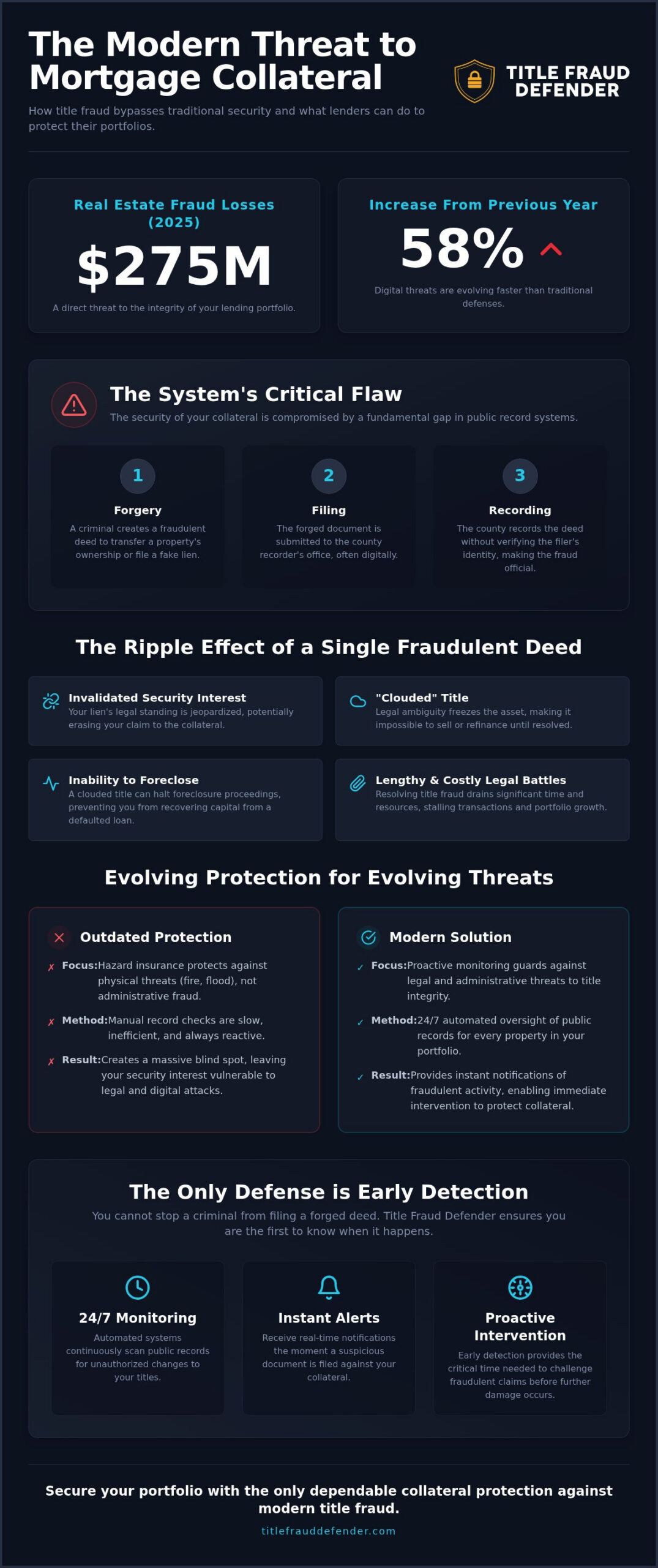
Did you know that real estate fraud losses reached 275 million dollars in 2025, marking a 58 percent increase from the previous year? For financial institutions, this surge represents more than just a statistic. It is a direct threat to the integrity of your portfolio. You recognize that your security interest is only as strong as the title behind it. Most county recording systems still do not verify the identity of individuals filing new deeds. This gap allows criminals to transfer ownership or file fraudulent liens without your knowledge. Modern collateral protection for mortgage lenders must now evolve to meet these digital threats head-on.
You deserve a system that works as hard as you do to protect home equity and lending integrity. This guide explains how proactive title monitoring serves as the ultimate shield for your collateral. You will learn how to move away from inefficient manual record checks and embrace a more secure, automated approach. Title Fraud Defender offers a path to total oversight. The following sections detail the essential tools needed to receive instant notifications of fraudulent activity and maintain clean titles for every property you secure in 2026.
Key Takeaways
- Understand why traditional hazard insurance is no longer enough to protect the legal integrity of your property portfolio.
- Learn why the lack of identity verification at the county level allows fraudulent deeds to be filed without immediate detection.
- Discover why proactive title monitoring is the most effective form of collateral protection for mortgage lenders in a digital landscape.
- Find out how Title Fraud Defender acts as a digital sentry to provide 24/7 oversight of your assets.
- Learn how to move from slow, manual record checks to a streamlined system that offers real-time notifications.
What is Collateral Protection for Mortgage Lenders?
Title integrity is the foundation of every valid security interest. You must protect the legal ownership rights as fiercely as the physical structure. A sturdy roof cannot save your investment if a forged deed removes your lien from the public record. Legal rights are the invisible threads that hold your portfolio together. Without them, you have no claim to the property. You must ensure that the person listed on the deed is the person who actually signed the mortgage note.
The Role of Security Interests in Lending
A mortgage creates a lien. A lien is a legal claim that gives you the right to the property if the borrower defaults. This lien depends entirely on a clear title. Any unauthorized change to a deed jeopardizes your ability to foreclose. A “cloud” on the title creates legal ambiguity. A cloud on the title essentially freezes the asset, making it impossible to sell or refinance until the legal mess is cleared. It takes years and significant capital to resolve. This financial impact can be devastating. It stalls transactions and drains resources. Gaining a deeper perspective by understanding mortgage fraud shows how these schemes target the documents verifying your financial stake.
Evolving Threats to Collateral Integrity
Modern risks are administrative. Criminals use digital tools to impersonate owners. They file unauthorized documents with county recorders. In 2025, real estate fraud resulted in 275 million dollars in losses. This represents a 58 percent increase from the previous year. Most county systems do not verify the identity of the person filing a deed. These fraudulent acts often go unnoticed until the damage is done. You cannot rely on the county to protect your interests. You must take control of the situation yourself.
You need a proactive guardian. You need a system that monitors the public record for unauthorized filings. Title Fraud Defender provides 24/7 title monitoring to detect changes the moment they occur. This oversight is critical for senior homeowners who hold significant equity. They are often the primary targets for deed fraud. Implementing robust collateral protection for mortgage lenders ensures your portfolio remains secure. It protects you from the unseen risks that traditional insurance misses. It provides the clarity you need to lend with confidence.
The Rise of House Deed Fraud: A Trend Analysis
Digital deed filing has streamlined real estate transactions. It has also lowered the barrier for criminals. Fraudulent actors no longer need to appear in person. They can submit forged documents from anywhere. Most county recording offices lack the resources to verify the identity of the person filing a deed. They accept documents at face value. This systemic vulnerability makes it easy for a criminal to steal a home’s title with a simple forgery. The speed of digital systems often works against the rightful owner.
Criminals frequently target senior homeowners and those who have lived in their homes for decades. These properties often hold significant equity. In many cases, the mortgage is either paid off or has a very low balance. This makes them lucrative targets for fraudulent transfers. For a homeowner, the stakes are deeply personal. It is not just about the money. It is the emotional burden of fighting a legal battle to reclaim a home you have owned for thirty years. The stress of losing your primary asset can be overwhelming. You must look beyond physical security to protect these financial foundations.
In 2025, real estate fraud resulted in 275 million dollars in losses, which was a 58 percent increase from the previous year. Some regions consistently reported the highest number of deed fraud filings in the nation for the third consecutive year in 2025. These numbers highlight the growing need for robust collateral protection for mortgage lenders. Traditional methods are failing to keep pace with these administrative threats. You can review the available protection plans to see how Title Fraud Defender addresses these modern risks.
How to Prevent House Deed Fraud via Early Detection
The reality is simple. You cannot stop a criminal from filing a forged deed. County clerks are generally required to record any document that appears to meet basic formatting requirements. They do not investigate the validity of signatures. Because you cannot stop the filing, detection becomes your only defense. Early detection allows you to intervene before the criminal can sell the property or take out new loans against it. Moving from manual, infrequent record checks to automated digital alerts ensures you are never the last to know about a change.
The Impact of Fraud on Mortgage Portfolios
A single fraudulent transfer creates a ripple effect. It clouds the title and halts any potential sale or refinance. For a lender, this is an administrative nightmare. You may find yourself entangled in years of litigation just to prove your lien is still valid. This uncertainty devalues the entire portfolio. Managing these risks requires a specialized approach to protect your real estate investor portfolio. Automated monitoring provides the real-time oversight necessary to maintain the integrity of every loan you service.
Comparing Traditional Insurance with Modern Title Monitoring
Traditional insurance models are often reactive. They wait for a disaster to happen before offering a solution. Title insurance is a perfect example. It’s a one-time policy that protects against defects that existed in the past. It provides no defense against future fraud. Collateral Protection Insurance, or CPI, is similarly limited. It usually focuses on physical hazards such as fire, wind, or floods. While these policies protect the physical structure, they ignore the legal ownership. If a criminal steals the title, the insurance on the roof doesn’t help you. You need a more comprehensive form of collateral protection for mortgage lenders.
Continuous monitoring serves as a proactive shield. It alerts you to changes the moment they are recorded. This creates a multi-layered defense. You combine the historic protection of title insurance with the real-time oversight of Title Fraud Defender. This approach is the most effective way to secure your collateral in 2026. It ensures that both the physical asset and the legal right to it remain under your control. By staying ahead of the filing, you prevent the administrative damage that insurance simply cannot stop.
Reactive vs. Proactive Security Models
The reactive model relies on luck. You might not discover a fraudulent deed until the borrower tries to sell the property years later. By then, the equity has often been drained by secondary fraudulent liens. Real-time alerts allow for immediate legal intervention. You can stop the damage before it becomes permanent. Monitoring is significantly more cost-effective than the alternative. Clearing a clouded title often requires expensive litigation and months of court dates. Acting early saves your capital and your reputation. It’s the difference between a minor alert and a major financial crisis.
Why Manual Checks Are No Longer Sufficient
Manual record checking is an impossible strategy for modern portfolios. You cannot expect a team to visit or search every county website for every property every single day. County systems are often fragmented and difficult to navigate. Human error is a constant risk. Automated systems provide 24/7 vigilance that manual checks cannot match. They offer a digital sentry that never sleeps. This specialized lender collateral monitoring removes the technical barriers to property oversight. You can secure your interest by checking our pricing plans to see how Title Fraud Defender provides the constant presence your portfolio requires. It’s time to move beyond outdated manual processes and embrace a solution designed for the speed of modern fraud.
How Lenders Can Implement Better Collateral Protection
Moving from a reactive insurance model to a proactive defense requires a clear strategy. Implementing robust collateral protection for mortgage lenders involves more than just purchasing a policy. It requires a systematic approach to property oversight. By following a structured implementation plan, you ensure that no unauthorized changes slip through the cracks of the county recording system. This methodical approach transforms your risk management from a passive check into an active shield.
- Step 1: Conduct a baseline title check. Before enrolling a portfolio in a monitoring service, you must verify the current status of every property. This identifies any existing “clouds” or unauthorized liens that may have been filed before protection began.
- Step 2: Enroll in continuous monitoring. Use a service like Title Fraud Defender to provide 24/7 oversight. This ensures that any new filing triggers an immediate alert, allowing you to act before the damage becomes permanent.
- Step 3: Establish a response protocol. Define exactly what happens when an alert is received. This should include verifying the document’s validity and coordinating with legal and servicing teams if a forgery is suspected.
- Step 4: Educate your borrowers. Informing homeowners about the risks of deed fraud empowers them to be your partners in security. This is particularly important for those with high equity who may be targeted by sophisticated scams.
Protecting Vulnerable Borrowers
Lenders should pay special attention to the senior homeowners in their portfolios. These individuals often hold the most equity and face the highest emotional toll if their property rights are challenged. Providing title protection for senior homeowners is a powerful way to preserve their financial legacy. When an alert is triggered, Title Fraud Defender provides expert guidance to help navigate the situation. This support ensures that homeowners aren’t left to face the complexities of the legal system alone. Early detection combined with professional advice prevents the loss of home equity and maintains the integrity of your security interest.
Integrating Monitoring into Risk Management
Effective risk management requires title alerts to be integrated directly into your existing loan servicing workflows. Instead of waiting for a periodic audit, you receive information in real time. This allows you to address issues as they arise, rather than years later during a foreclosure or sale. Much like how DocChaser automates the collection of mortgage documents for independent brokers, a property records monitoring service should be a standard part of your collateral protection for mortgage lenders strategy. Title Fraud Defender identifies unauthorized liens by continuously scanning county property records for any newly filed documents that reference the specific property address or parcel number. This automated vigilance replaces the inefficiency of manual checks and removes the risk of human error.
Real-Time Vigilance with Title Fraud Defender
Title Fraud Defender operates as a constant digital sentry. It fills the critical gaps left by county recording systems. As established in previous sections, these systems often fail to verify identities. This vulnerability leaves your assets open to unauthorized transfers and fraudulent filings. Professional collateral protection for mortgage lenders requires a solution that never sleeps. You need a system that scans records 24/7. This ensures that any attempt to file a forged deed is detected instantly, allowing you to stop the damage before it becomes permanent.
The value of this service extends beyond simple alerts. Every customer receives expert guidance. When an alert is triggered, you aren’t left to navigate the legal aftermath alone. A specialist helps you understand the nature of the filing and the steps needed to secure the title. For institutional lenders and investors, Title Fraud Defender offers bulk property protection plans. These plans are designed to monitor hundreds or thousands of deeds simultaneously. This scale allows you to maintain total oversight without increasing your internal administrative overhead.
Comprehensive Lien and Title Reporting
Maintaining collateral health requires regular oversight. You need to know if new liens have been placed against a property that could challenge your priority. Title Fraud Defender provides detailed lien status reports that simplify complex property records into clear alerts. You can gain more insights into these processes by reading the definitive guide to title monitoring services. This transparency ensures you always have a clear view of your portfolio’s legal standing. It removes the technical barriers that often make property oversight feel overwhelming.
Starting Your Protection Today
Protecting your interests is a straightforward process. You can start with a free title check to identify any existing issues before they become crises. Professional monitoring is the only dependable way to detect forged deeds early. It provides the peace of mind that comes from unwavering reliability. You have the power to protect your home equity and lending integrity starting now. If you have questions about a specific property or want to discuss bulk protection, you can call a specialist at 866-326-8650. Early detection is the key to preventing financial loss. Title Fraud Defender stands ready as your proactive guardian.
Take the first step toward total collateral security by visiting our pricing page.
Securing Your Lending Portfolio for the Future
The digital landscape of 2026 requires a shift in how you view asset security. Traditional insurance remains a vital piece of the puzzle, but it cannot stop a fraudster from filing a forged deed today. You have seen that county systems are not designed to verify identities. This makes proactive oversight your most powerful tool. By embracing 24/7 proactive digital monitoring, you transform your risk management from a reactive chore into a constant shield.
Title Fraud Defender provides the specialized bulk property protection necessary for institutional portfolios. You no longer have to wait for a title search to discover a problem that occurred years ago. With expert guidance for fraud resolution, you have a partner ready to assist the moment an alert is triggered. Implementing comprehensive collateral protection for mortgage lenders ensures that your security interest remains legally sound. You can protect your home equity and lending integrity with confidence.
The path to total collateral security is clear and manageable. Take control of your portfolio’s future today.
Frequently Asked Questions
Is collateral protection for mortgage lenders different from title insurance?
Collateral protection for mortgage lenders differs significantly from title insurance because it focuses on the future rather than the past. Title insurance is a one-time policy that covers defects existing before the loan closed. It does not alert you to a forged deed filed next week. Professional monitoring provides a continuous digital shield that watches for new, unauthorized changes. This proactive approach ensures your security interest remains intact throughout the entire life of the loan.
Can title monitoring really prevent house deed fraud?
Title monitoring prevents financial damage by ensuring you are never the last to know about a change. While you cannot stop a criminal from filing a forged document at the county office, you can stop them from using that document to steal equity. Early detection is the only way to prevent house deed fraud from becoming a permanent loss. Title Fraud Defender provides the instant notification needed to trigger immediate legal or administrative intervention.
How much does a professional monitoring service cost for a lender?
The cost of professional monitoring varies based on the size of your portfolio and the level of oversight required. Title Fraud Defender offers specialized bulk property protection for lenders who need to secure hundreds or thousands of assets simultaneously. Instead of paying for expensive manual audits, you can choose a plan that fits your specific risk management budget. You can start with a free title check to assess the current health of your portfolio.
What happens if Title Fraud Defender detects an unauthorized change on a deed?
You will receive an instant notification the moment a change is detected in the public record. After the alert, Title Fraud Defender provides expert guidance to help you navigate the next steps. This support is essential for understanding the nature of the filing and coordinating a response. Having a knowledgeable partner ensures that you don’t have to face the complexities of a fraudulent deed transfer alone. You can call a specialist at 866-326-8650 for immediate assistance.
Is manual checking of county records enough to protect my property?
Manual checking is no longer a dependable way to protect your interests. It is nearly impossible to manually search every county record for every property in a portfolio every single day. County systems are often difficult to navigate and prone to human error. Automated monitoring removes these technical barriers. It provides a digital sentry that maintains constant vigilance, ensuring that no unauthorized filing goes unnoticed for months or years.
Can a forged deed be legally filed without my knowledge?
Yes, a forged deed can be filed without your knowledge because most county systems do not verify the identity of the filer. Clerks generally accept documents that appear to meet basic formatting requirements. This systemic gap is what criminals exploit to transfer ownership or file fraudulent liens. Because the system does not stop the filing, you must have a professional monitoring service to detect it the moment it happens.
How does Title Fraud Defender help senior homeowners specifically?
Title Fraud Defender helps senior homeowners by protecting the significant equity they have built over decades. Seniors are often primary targets for deed fraud because their homes may have low mortgage balances. The service provides a reassuring layer of security that traditional insurance misses. By offering expert guidance, Title Fraud Defender helps seniors and their families navigate the emotional and legal toll of a detected fraud incident without unnecessary stress.
What is a lien status report and why do lenders need it?
A lien status report is a comprehensive summary of all legal claims or encumbrances currently attached to a property. Lenders need these reports to ensure their security interest remains in the primary position. Unauthorized liens can cloud a title and complicate future sales or foreclosures. Regular reporting is a vital part of collateral protection for mortgage lenders, allowing you to identify potential risks before they impact the value of your portfolio.