


What if a single piece of paper filed in a distant county office could silently freeze your ability to sell your home or tap into your hard earned equity? Discovering a legal claim against your deed is a high stakes situation that requires immediate, decisive action. You must know exactly what to do when a lien is placed on your property before a minor clerical error or a sophisticated fraudster compromises your financial security. Title Fraud Defender understands that your home is your most significant asset, and any threat to its title is a direct threat to your financial future.
It is natural to feel a sense of alarm when legal jargon and unexpected filings cloud your property rights. You have worked hard to build your legacy, and the confusion surrounding modern deed fraud only adds to the pressure. This guide provides the clarity you need to move from anxiety to total control. Title Fraud Defender outlines the essential steps to identify, verify, and resolve property liens while learning how to protect your equity from fraudulent claims. You will gain a clear understanding of the verification process, the impact of 2026 homestead exemptions, and the direct path to removing unauthorized encumbrances for good.
Key Takeaways
- Understand how a property lien serves as a legal claim that can freeze your home equity and block any future sale or refinance.
- Follow a methodical guide on what to do when a lien is placed on your property to verify its legitimacy through official county records.
- Learn to spot the warning signs of fraudulent filings, including signature forgery and claims from unknown entities.
- Realize the limitations of manual public record searches and why early detection is the only way to prevent lasting financial damage.
- Secure your property with a proactive strategy that moves beyond reactive searching to provide constant, 24/7 oversight of your deed.
Understanding Property Liens and Their Impact on Your Equity
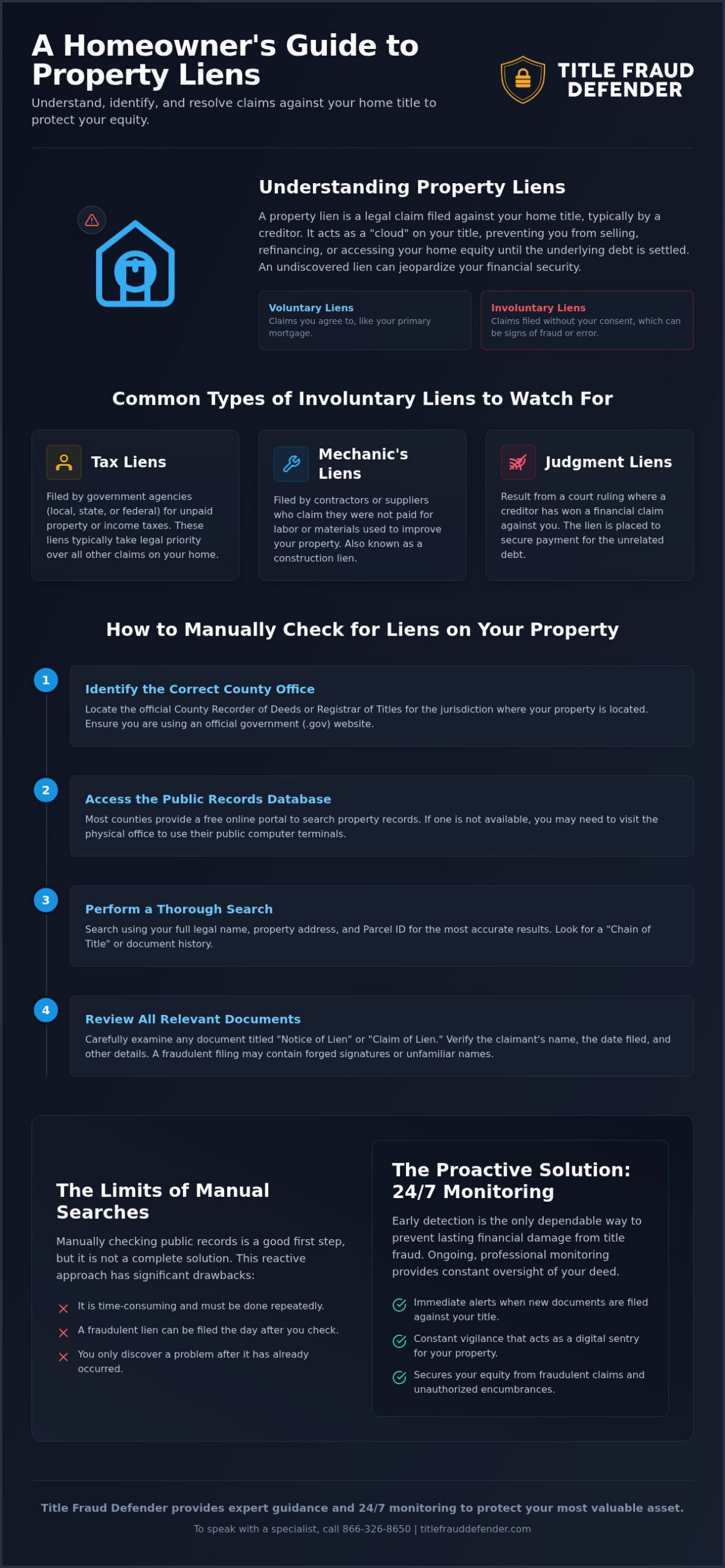
A property lien is a legal claim or encumbrance filed against your home title by a creditor or government entity. It acts as security for a debt, which means you cannot sell or refinance the property until the claim is satisfied. To protect your financial future, you must understand the answer to the question, What is a property lien? and how it functions as a cloud on your title. This legal anchor prevents the transfer of ownership and can even lead to foreclosure if the debt remains unpaid.
Voluntary liens are claims you agreed to when you purchased the home or took out a loan. Your mortgage is the most common example of this. Involuntary liens are much more concerning because they are filed without your consent. These can stem from unpaid taxes, contractor disputes, or legal judgments. These filings effectively lock your equity, making it impossible to access the wealth you have built in your home without first addressing the claimant.
Why Every Homeowner Should Regularly Check for Liens
Regular verification ensures that no unauthorized parties have made claims against your property records. Undiscovered liens can stall a home sale at the last minute or prevent you from accessing a line of credit. Knowing what to do when a lien is placed on your property starts with the simple act of awareness. If you don’t know a lien exists, you cannot defend against it.
Early detection is the only way to prevent a minor filing from becoming a major crisis. For senior homeowners, an unexpected lien is often the first warning sign of potential deed or title fraud. Criminals may file fake liens to siphon off equity or complicate your ownership. Title Fraud Defender positions itself as a digital sentry to ensure you aren’t blindsided by these hidden threats at a critical moment.
Common Types of Involuntary Liens to Watch For
Involuntary liens come in several forms, each with its own set of legal consequences. You must be able to identify these three common threats to your property rights:
- Tax Liens: Filed by local, state, or federal government agencies for unpaid property or income taxes. These often take priority over all other claims on your home.
- Mechanic’s Liens: These are filed by contractors, subcontractors, or suppliers who claim they were not paid for work performed on your property.
- Judgment Liens: These result from court rulings in lawsuits where a creditor has won a financial claim against you for unrelated debts.
If you find yourself wondering what to do when a lien is placed on your property, the immediate priority is identifying which type of claim has been filed. Each requires a specific legal path for resolution. Title Fraud Defender provides the expert guidance needed to navigate these technical processes and secure your home equity against unauthorized encumbrances.
Step-by-Step Guide to Checking for Liens for Free
Finding an unexpected encumbrance on your home is a distressing experience. You need to know exactly what to do when a lien is placed on your property to clear your title and protect your equity. The first step is identification through official public records. Every county maintains a record of documents that affect property ownership. Understanding how liens are publicly recorded in these official channels becomes a vital piece of knowledge for any homeowner. You must act as your own investigator to uncover the truth behind these filings.
Identify the official County Recorder of Deeds or Registrar of Titles office for the area where your property is located. Most jurisdictions now offer a free, searchable online database. Ensure you are on a genuine “.gov” website to avoid predatory third party sites that charge for information that is legally public and free. Perform a search using your full legal name or the specific property address to pull up the public records index. Carefully review the results for any documents titled “Notice of Lien” or “Claim of Lien” that you do not recognize.
Accessing Public Records Through the County Recorder
Most counties maintain an online portal that allows you to search by grantor or grantee name. If your county does not provide online access, you may need to visit the physical office to use their public terminals. This manual process can be time consuming but is necessary for a complete picture. Always verify the filing date and the name of the claimant listed on the document. This direct oversight is your first line of defense against errors.
Navigating Online Property Record Databases
Search by your parcel ID or legal description for the most accurate results. Searching by name alone can lead to confusion if you share a name with another resident in the county. Look for a “History” or “Chain of Title” section to see every document filed in chronological order. This provides a clear view of when the lien was filed and by whom. Be aware that while the index is often free to view, some counties charge a fee to download or print the actual document image.
This image is critical because it contains the signatures and specific details of the claim. If you find something suspicious during your search, you can request a formal lien report to get professional help in interpreting these complex records. If you discover a document you did not authorize, do not panic. Understanding what to do when a lien is placed on your property involves verifying the details before taking action. Title Fraud Defender recommends documenting every step of your search to build a trail of evidence.
The Challenges and Risks of Manual DIY Lien Searches
Manual searches provide a sense of security, but that security is often an illusion. When you perform a one-time check of your county’s records, you are only seeing a single moment in the history of your deed. This leaves your equity vulnerable during the weeks or months between your manual reviews. If you are researching what to do when a lien is placed on your property, you must realize that a clear title today does not guarantee a clear title tomorrow. These gaps in oversight are exactly what sophisticated fraudsters look for when targeting high equity homes.
County systems are notoriously fragmented. You may find yourself searching multiple databases just to ensure every potential encumbrance is accounted for. Simple clerical errors are another major hurdle. A misspelled name or an incorrect property description in the search bar can lead you to miss a critical filing that is legally attached to your home. These small mistakes create a window of opportunity for criminals who exploit long periods of inactivity. For senior homeowners, the risk of missing a subtle change in public records can have devastating financial consequences.
Why One-Time Checks Are Not Enough for Protection
Title fraud can occur at any moment. Criminals often target properties with significant equity, specifically looking for owners who may not check their records frequently. They wait for these gaps in oversight to file forged documents or unauthorized liens. Proactive monitoring is necessary to catch these changes the second they are recorded. If you rely solely on manual checks, you might not discover a fraudulent filing until you attempt to sell your home or refinance. At that point, the legal damage is already done and much harder to reverse.
The Complexity of Multi-Jurisdictional Searches
Navigating public records is rarely a linear process. Certain filings, such as federal tax liens, may be recorded in different offices than local mechanic’s liens or municipal claims. This creates a complex landscape where you must manage different user interfaces and search protocols for various county websites. Technical barriers often lead to confusion and oversight. Title Fraud Defender simplifies this by providing continuous oversight of all relevant property records. This eliminates the need for you to manage multiple logins or understand the technicalities of various county databases. Knowing what to do when a lien is placed on your property is important, but having a system that alerts you the moment it happens is essential for real security.
Identifying Fraudulent Liens and Security Red Flags
Distinguishing between a legitimate debt and a criminal claim is the most critical step in protecting your equity. Legitimate liens follow a clear paper trail of contracts, missed payments, or tax assessments. Fraudulent filings, however, often appear without warning. Be extremely wary of any lien filed by a company or individual you have never had a business relationship with. If you don’t recognize the name on the filing, treat it as a high priority threat until proven otherwise. Criminals count on homeowners being too overwhelmed by legal jargon to question the source of the claim.
Examine the document image closely. Check the signatures on the filed documents to see if they appear forged or do not match your legal signature. Scammers often rely on the fact that county clerks record documents without verifying the authenticity of the signatures. You should also question any lien filed for an arbitrary dollar amount that does not correspond to a known debt or service. Watch for “Clouds on Title,” which are irregularities in the public record that cast doubt on your legal ownership. These red flags are the primary tools used to begin stripping away your home value.
How Scammers Use Liens to Steal Home Equity
Scammers often file a fraudulent lien to create a fake debt, making it appear as though you owe them money. This is a predatory tactic known as equity stripping. Once the lien is recorded, they can use these forged documents to initiate a foreclosure process or pressure you into a high stakes settlement. This tactic is frequently used against senior homeowners who have paid off their mortgages. Because these homes represent decades of built up equity, they are prime targets for criminals looking for a quick payout through legal manipulation.
What to Do if You Discover an Unauthorized Lien
If you find a suspicious filing, you must act with speed and precision. Contact a specialist at Title Fraud Defender immediately at 866-326-8650 for expert guidance. It is vital that you avoid contacting the party who filed the lien directly without professional advice. Tipping off a scammer can lead them to accelerate their efforts or hide their tracks before law enforcement can intervene. Gather all your property records and prepare to file a formal report with local law enforcement and the county recorder. Knowing exactly what to do when a lien is placed on your property involves securing professional oversight before making any legal moves.
Moving from Manual Checks to Proactive Title Monitoring
Relying on manual public record searches is a reactive strategy that often fails to protect your home equity in real time. Title Fraud Defender provides constant vigilance over your property records, acting as a digital sentry for your home. Instead of performing periodic manual searches that leave your equity exposed, you receive instant alerts the moment a change is detected in your title. This service bridges the gap between confusing county record systems and your personal financial security. This proactive approach ensures you are never blindsided by a filing that has been sitting in the public record for months.
A professional property lien report provides deeper insights than a standard public search can offer. It clarifies the nature of the claim and the identity of the claimant, giving you the facts needed to respond effectively. Understanding exactly what to do when a lien is placed on your property requires more than just a name on a screen. It requires a comprehensive view of the entire chain of title and any irregularities that might indicate a fraudulent attempt to strip your equity.
The Benefits of 24/7 Title Monitoring Services
Gain the confidence of knowing an expert system is watching your title records even when you are not. Automated alerts allow you to act within hours of a fraudulent filing, which can prevent significant financial loss and emotional distress. This immediate awareness is the only way to effectively manage what to do when a lien is placed on your property by an unauthorized party. Speed is your greatest ally in the defense of your home. You can review the definitive guide to title monitoring to understand how these systems work to protect your interests.
Starting Your Defense with a Free Title Check
Title Fraud Defender offers a free title check to help you establish a baseline for your property’s current status. This low pressure first step empowers you with the knowledge needed to secure your home equity effectively without any immediate financial commitment. Knowing your title is clear today is the foundation for protecting it tomorrow. Call Title Fraud Defender at 866-326-8650 to speak with a specialist and start protecting your most valuable asset today. Every day that passes without professional oversight is a day your equity remains vulnerable to unseen risks.
Take Command of Your Property Security
You now possess the essential roadmap to handle unexpected claims against your deed. From identifying fraudulent red flags to knowing exactly what to do when a lien is placed on your property, you are no longer navigating this landscape alone. While manual searches provide a brief snapshot of your records, they cannot compete with the security of constant vigilance. Protecting your legacy requires moving from reactive searching to proactive oversight that guards your home every hour of the day.
Title Fraud Defender stands ready as your digital sentry, providing the expert guidance needed to resolve fraud incidents before they compromise your financial security. 24/7 monitoring ensures you are never the last to know about a change to your deed. If you have questions about a specific filing, you can call 866-326-8650 to speak with a title security specialist who understands the high stakes of senior equity protection.
You have worked a lifetime to build your home equity. Take this decisive step today to ensure your property remains secure and your peace of mind stays intact for years to come.
Frequently Asked Questions
How do I find out if there is a lien on my property for free?
You can identify property liens for free by visiting the official website of your local County Recorder of Deeds or Registrar of Titles. Most jurisdictions provide a searchable public records database where you can enter your full legal name or property address. While the index is usually free to browse, keep in mind that some counties charge a fee to download or print the actual document image for your records.
Can someone put a lien on my house without me knowing?
Yes, it is possible for a lien to be recorded against your property without your immediate knowledge. County clerks generally accept documents for filing as long as they meet basic formatting requirements, and they do not verify the underlying debt or notify the homeowner. This lack of verification is why many homeowners only discover a lien during a title search when they attempt to sell or refinance their home.
Does a lien on my property affect my credit score?
Most property liens, including federal tax liens, no longer appear on consumer credit reports as of 2018. However, they remain public records that will be discovered by lenders and title companies during any financial transaction. Even if your credit score remains unaffected, a lien can still block your ability to secure a mortgage or a home equity line of credit. It is vital to know what to do when a lien is placed on your property to clear these hurdles.
How long does a lien stay on a property title?
The duration of a lien depends on the type of debt and specific state laws. For instance, the IRS generally has 10 years from the date of assessment to collect unpaid taxes before a federal tax lien becomes unenforceable. Mechanic’s liens often have much shorter lifespans, sometimes expiring in as little as six months. However, even an expired lien can remain a cloud on your title until a formal release is recorded in the county system.
What is the difference between a title search and a lien search?
A title search is a comprehensive review of the entire history of a property, including ownership transfers, easements, and all recorded encumbrances. A lien search is a more targeted investigation specifically looking for financial claims or debts filed against the current owner. While a title search includes liens, a dedicated lien search is often faster and focuses strictly on identifying outstanding debts that could lead to foreclosure or prevent a clean sale of the property.
Can a fraudulent lien lead to losing my home?
Yes, a fraudulent lien can lead to foreclosure if it is not identified and contested in a timely manner. Scammers use forged documents to create fake debts, which they then use to initiate legal proceedings against your home equity. While you cannot stop a forged document from being filed, early detection allows you to take legal action before a foreclosure sale occurs. Title Fraud Defender provides the constant oversight needed to catch these red flags early.
Is there a way to get a free property lien report?
You can perform a basic manual search for free through county records, but a professional report offers more comprehensive data. Title Fraud Defender provides a free title check that helps you establish a baseline for your property’s current status. This service simplifies the process by identifying existing filings without the technical barriers of navigating fragmented county databases. It is a low pressure way to verify that your home equity remains secure and unencumbered.
What should I do if I find a lien I do not recognize?
If you discover an unfamiliar filing, you must move quickly to verify its legitimacy through official records. First, obtain a copy of the actual document to check for forged signatures or incorrect information. Knowing what to do when a lien is placed on your property involves professional guidance to avoid tipping off potential scammers. You should contact Title Fraud Defender at 866-326-8650 to speak with a specialist who can help you navigate the resolution process safely.
Lien fraud lands hardest on owners with full equity and no lender watching the file, a description that fits most retired homeowners. Our property title protection for seniors checklist covers what that exposure actually looks like.