


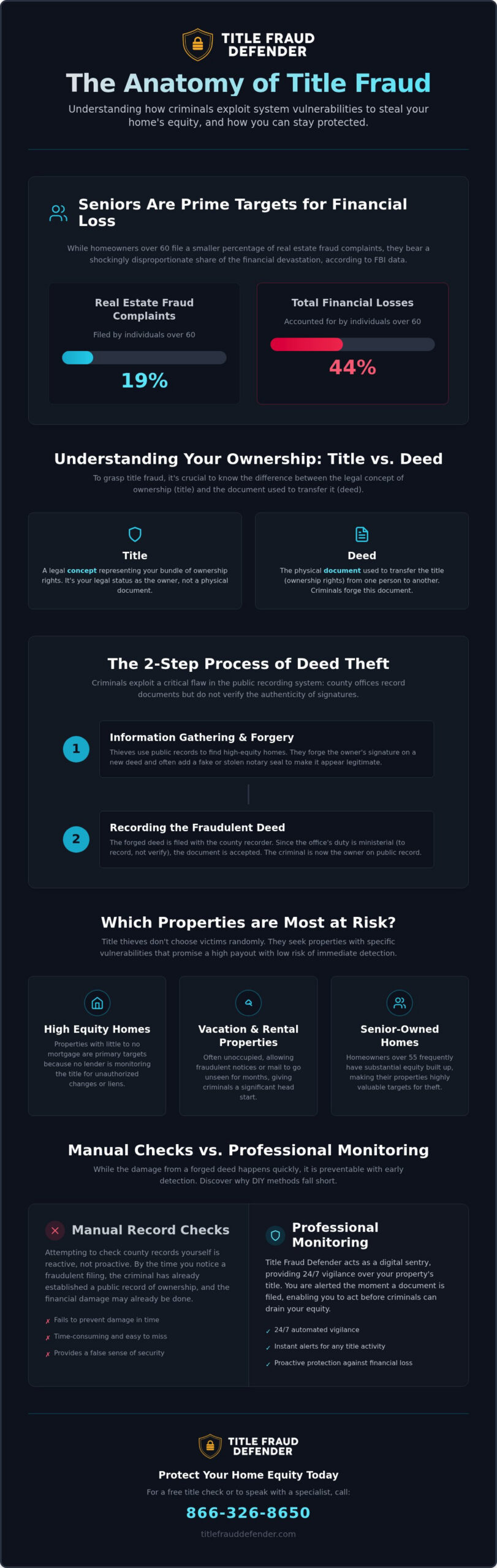
Did you know that while individuals over 60 filed only 19 percent of real estate fraud complaints in 2024, they accounted for 44 percent of the total financial losses? This staggering figure from the FBI highlights a targeted threat that many homeowners do not see coming until their equity is already at risk. The consequences of title fraud go far beyond a simple paperwork error. They represent a direct attack on your financial legacy and your personal security.
You have worked for decades to own your home, so the idea that a criminal could forge your name and steal your title is deeply unsettling. It is a confusing process that leaves many victims feeling vulnerable and overwhelmed by potential legal battles. Title Fraud Defender provides the clarity and oversight you need to navigate these risks with confidence. This guide details the financial, legal, and emotional fallout of deed theft while showing you how to detect fraud before it leads to a total loss. You will discover how professional monitoring serves as an essential shield. It provides the constant vigilance required to protect your home and ensures that you remain in total control of your property’s future.
Key Takeaways
- Learn how forged deeds bypass county verification systems to transfer ownership without your knowledge or consent.
- Understand the severe financial and legal consequences of title fraud, including how criminals drain equity through unauthorized loans.
- Discover why homeowners over 55 are frequently targeted and the emotional toll this theft takes on families.
- Identify the critical limitations of manual record checks and why they often fail to prevent damage.
- See how Title Fraud Defender acts as a digital sentry to provide the 24/7 vigilance required for property protection.
What is Title Fraud and How Does it Occur?
Title fraud is a specific type of financial crime where a criminal illegally transfers the ownership of your property into their name. This is accomplished by forging your signature on a deed and filing it with the county recorder. While it is often referred to as deed fraud or deed theft, the result is the same: a stranger now appears to own your home on official records. Understanding the consequences of title fraud starts with recognizing how criminals exploit gaps in the public recording system. Unlike traditional theft, there is no broken window or missing jewelry. You may continue living in your house for months or years without realizing that your legal ownership has been compromised.
It is vital to distinguish this from general identity theft. While identity theft involves using your personal information to open credit cards or bank accounts, title theft is a targeted attack on your most valuable asset. The criminal uses a fraudulent conveyance to strip away your rights to the property. One of the most devastating consequences of title fraud is that the damage happens in the dark. Because most county offices do not verify signatures, the forged document is accepted and recorded as legitimate without any immediate alert sent to you.
The Difference Between Title and Deed
To understand this crime, you must know the difference between these two terms. Title is a legal concept that represents your bundle of ownership rights. It is not a single piece of paper but rather your status as the legal owner. The deed is the physical document used to transfer those rights from one person to another. When a criminal creates a forged deed, they are creating a fake key to your property. Once that deed is recorded, they can use the legal title to take out loans or even attempt to sell the home to an unsuspecting buyer.
Common Targets for Title Thieves
Criminals do not choose properties at random. They look for specific vulnerabilities that make the crime easier to commit and harder to detect. Certain properties are more attractive to thieves due to the potential for a high payout with minimal oversight.
- High Equity Homes: Properties with no active mortgage are the primary targets because there is no lender monitoring the title for changes or unauthorized liens.
- Vacation and Rental Properties: These homes are often unoccupied for long periods. This allows mail or legal notices regarding the title to go unnoticed for weeks or months.
- Senior-Owned Homes: Homeowners over the age of 55 often have significant equity, making them attractive targets for scammers. Title Fraud Defender offers specialized guidance for senior homeowners who want to protect their life’s work from these sophisticated threats.
By identifying these risks early, you can take proactive steps to secure your equity. Title Fraud Defender acts as a digital sentry, providing the constant vigilance required to catch these fraudulent filings before the damage escalates.
The Procedural Mechanics of Deed Theft
The speed at which a criminal can seize control of your property title is often shocking to homeowners. This is not a crime of physical force but one of procedural manipulation. Criminals exploit a significant vulnerability in the U.S. property recording system: the lack of signature verification. Most county recorder offices operate in a ministerial capacity. This means their legal duty is to record documents that meet basic formatting requirements rather than to investigate their authenticity. They do not verify that the person signing the deed is the actual owner. One of the most immediate consequences of title fraud is the speed at which your legal status can change. A forged document can be processed and made part of the public record in a matter of days or even hours.
To bypass traditional security, thieves often use forged or stolen notary seals. A notary seal is intended to be a mark of trust, but modern technology makes these stamps easy to replicate. Once a criminal applies a fake seal and a forged signature to a deed, the document appears legitimate to a county clerk. This procedural loophole allows the thief to walk into a government office and walk out as the owner of your home on paper. You can secure your property today with professional title monitoring to ensure you are alerted the moment a document is filed.
Step 1: Information Gathering and Forgery
The process begins with digital reconnaissance. Criminals use public records to identify properties that are ripe for theft. They look for homes with high equity, no active mortgage, or owners who may be living elsewhere. By accessing these records, they gather the specific legal descriptions and parcel numbers required to create a convincing forgery. They may also use stolen identities to impersonate you, making the fraudulent deed appear even more credible. This preparation ensures that when they file the forged document, it matches the existing property data perfectly.
Step 2: Recording the Fraudulent Document
Once the forgery is complete, the thief submits the document to the county recorder. Because the office does not check the validity of the signatures, the deed is accepted and stamped. This act creates a public record of the theft. On paper, the criminal now has the legal authority to sell the property or use it as collateral for a loan. This recording is the catalyst for the severe consequences of title fraud, as it provides the criminal with a “clean” title they can exploit for financial gain. The homeowner usually remains in the dark because the county does not typically send a confirmation notice to the previous owner when a deed is transferred.
Financial and Legal Consequences of Title Fraud
Once a forged deed is recorded, the thief moves quickly to exploit the asset. The most immediate financial consequences of title fraud involve the loss of your home equity. If a criminal uses your property as collateral for a high-interest loan, that debt is legally attached to your home. You may only discover the theft when a lender begins foreclosure proceedings for a loan you never signed. This transition from a paper crime to a financial crisis happens with startling speed.
Beyond the direct theft of equity, the crime creates a “cloud on title.” This is a legal term for any claim or encumbrance that makes the ownership of a property uncertain. A cloud on title effectively freezes your ability to manage your asset. You cannot sell the home, refinance your mortgage, or transfer the property to your heirs until the fraud is legally resolved. Normal real estate milestones, such as obtaining a certified valuation from Meridian Property Appraisers Inc. during a planned sale or estate transfer, come to an immediate standstill. Fraudulent liens can also be placed against the property by contractors or creditors working with the scammer, further complicating your financial standing.
The Quiet Title Action
Scammers often “cash out” as quickly as possible. They seek out predatory lenders who offer fast approvals with minimal oversight. When these scammers disappear with the cash, the lender looks to your home for repayment. These unpaid fraudulent loans can trigger foreclosure, forcing you into a defensive legal battle to save your residence. You are forced to prove you didn’t take the money while the lender attempts to seize the property.
Your credit score often suffers during this period. If a fraudulent loan is tied to your identity, missed payments will appear on your credit report. Correcting these errors is a slow and frustrating process that requires constant communication with credit bureaus and lenders. Early detection is the only way to prevent these cascading consequences of title fraud. Title Fraud Defender provides the oversight needed to identify unauthorized liens before they drain your hard-earned equity and damage your financial reputation.
The Human Stakes: Impact on Seniors and Families
Seniors are primary targets for a simple reason. They often own their homes outright. For many, this property represents forty years of hard work and the bulk of their retirement savings. When a criminal targets a senior, they aren’t just stealing a document. They are attacking a lifetime of financial discipline. The emotional consequences of title fraud can be paralyzing. Discovering that your primary asset has been compromised creates a profound sense of insecurity. You might feel like a stranger in your own home, wondering how a signature you never wrote could threaten your residence.
This crime affects the entire family unit. It is not just about the current resident; it is about the legacy you intended to leave behind. Title Fraud Defender understands that your home is the foundation of your family’s future. By maintaining constant vigilance, the service ensures that your equity remains intact for the next generation. Understanding the human impact is the first step toward taking decisive action to protect your home.
Vulnerability of Estate and Inherited Property
Criminals often exhibit a predatory level of patience. They monitor public death notices and obituaries to identify properties that may be sitting vacant. These estate properties are highly vulnerable because the rightful owner is no longer there to monitor the mail or notice unusual activity. Heirs often discover the theft months later when they attempt to sell the family home. They find a forged deed already recorded, which stops the probate or sale process in its tracks. Executors have a legal responsibility to protect these assets. Implementing professional title fraud detection is a critical step for anyone managing a deceased relative’s estate. It ensures that the legacy intended for the family remains secure from opportunistic thieves.
The Psychological Burden of Property Theft
The damage is not limited to your bank account. Victims often describe a deep sense of violation that mirrors the trauma of a physical home invasion. You may find yourself answering calls from debt collectors demanding payment for predatory loans you never authorized. This constant pressure can lead to severe anxiety and a loss of sleep. It is a heavy burden to carry, especially for senior homeowners who deserve peace of mind in their retirement years. While the consequences of title fraud are serious, they are also preventable. Early detection stops the criminal before they can drain the equity you spent a lifetime building. Title Fraud Defender provides the oversight needed to catch these threats early, allowing you to focus on your family instead of legal battles.
Why Professional Monitoring is the Only Dependable Shield
Relying on manual checks of county records is a high-risk strategy. Many homeowners believe they can simply check their local recorder’s website once or twice a year to stay safe. This approach is fundamentally flawed because it is reactive. By the time you notice an unauthorized change, the criminal has likely already used your title to secure a loan or sell the property. Professional monitoring changes the dynamic from reactive discovery to proactive defense. It acts as a digital sentry that never sleeps.
Title Fraud Defender provides 24/7 vigilance over your property records. This constant oversight ensures that you are notified the moment any document is submitted for filing. You cannot stop a determined criminal from submitting a forged deed. However, you can stop the financial consequences of title fraud by catching the filing immediately. If you are unsure about the current status of your home ownership, you should start with a free property title check to establish a clean baseline.
Title Monitoring vs. Title Insurance
There is often confusion between title insurance and title monitoring. Title insurance is a one-time purchase made during the home-buying process. It is designed to protect you from defects that occurred in the past, such as unknown heirs or existing liens from previous owners. It does not provide protection against future crimes like deed theft. Title Fraud Defender fills this critical gap. While insurance looks backward, monitoring looks forward. It provides a protective layer that insurance was never meant to offer.
The Value of Immediate Alerts
Speed is your most effective weapon against property theft. When an alert is triggered, Title Fraud Defender provides expert guidance to help you understand the filing and take immediate action. You don’t have to handle the county legal system alone. Having a knowledgeable partner ensures that you can move quickly to freeze equity drainage and notify authorities. If you receive a suspicious notice or have concerns about your property’s security, you can call a specialist directly at 866-326-8650 for assistance.
This level of oversight removes the technical barriers that often prevent homeowners from protecting themselves. Instead of trying to decipher complex legal jargon at the county office, you receive clear, actionable information. This streamlined process provides the peace of mind that comes from knowing your most valuable asset is under constant protection. You deserve to enjoy your retirement years without the looming anxiety of unseen risks. Taking this simple step today secures your financial legacy for years to come.
Secure Your Financial Legacy
Your home is more than just a building; it is the cornerstone of your retirement and your family’s future. While forged deeds are a serious threat, they do not have to result in financial ruin. By understanding the procedural nature of this crime, you have already taken the first step toward safety. The severe consequences of title fraud only escalate when a thief is given time to operate in secret. Early detection through constant oversight is the most effective way to ensure your equity remains exactly where it belongs.
Title Fraud Defender provides the 24/7 Title Monitoring and expert guidance required to act as your digital sentry. You can maintain total control over your property records without the burden of manual research. If you have questions about your property’s current status, call a specialist at 866-326-8650 for immediate assistance. You have worked hard to build your legacy. Taking this proactive step ensures that your hard-earned assets stay protected for years to come.
Frequently Asked Questions
Is title fraud the same as identity theft?
No, title fraud is a distinct crime focusing specifically on property ownership. While identity theft involves using personal data for financial accounts, title fraud uses forged deeds to transfer a home’s legal rights. This difference is critical because traditional identity theft protection usually does not monitor county property records. Title Fraud Defender provides the specialized oversight needed to detect these property-specific threats before they result in a total loss of equity.
How much does it cost to fix a fraudulent title?
Fixing a fraudulent title is a costly and lengthy legal process. You must typically hire specialized attorneys to file a Quiet Title Action in court. While this specific process is civil, those interested in how legal experts handle complex criminal litigation and defense strategies can learn more about Abogado Penal Temuco. These legal fees, combined with court costs and the potential loss of equity, can create a massive financial burden. Because these costs are significant, early detection is the only way to avoid the most severe financial consequences of title fraud. Professional monitoring helps you stop the damage before legal bills escalate.
Title insurance cannot stop a criminal from forging a deed or filing it with the county. It is a one-time policy designed to protect against ownership defects that occurred before the home was purchased. It does not provide active monitoring for new, fraudulent documents filed after that purchase. Title Fraud Defender fills this gap by providing 24/7 vigilance, acting as a digital sentry against future threats that insurance was never intended to cover.
What happens if a scammer takes a mortgage out on my home?
If a scammer takes out a mortgage, that debt is legally attached to the property title. You may not realize the loan exists until the lender begins foreclosure proceedings because the payments are not being made. This situation puts the residence at immediate risk. You will be forced into a defensive legal battle to prove the signature was forged and to clear the unauthorized lien from the property records.
How often should I check my property title for fraud?
Manual checks of county records are often insufficient because criminals move with extreme speed. Checking once or twice a year leaves massive windows of vulnerability where a thief can record a deed and take a loan. Title Fraud Defender recommends continuous, 24/7 monitoring rather than relying on DIY checks. This constant oversight ensures that you receive an immediate alert the moment any document is filed, allowing you to react before the criminal can drain any equity.
Does the county recorder notify me if a new deed is filed?
Most county recorders do not notify homeowners when a new deed or lien is filed against their property. Their role is ministerial, meaning they simply record documents that meet basic formatting requirements without verifying the authenticity of signatures. This lack of notification is why many homeowners remain unaware of the theft for months. Relying on the government to protect a title is a risk that professional monitoring services are designed to eliminate.
Can I lose my home if someone steals the title?
You can lose your home if a fraudulent title remains undetected. While you still physically reside in the house, a criminal can use the forged deed to sell the property to an unsuspecting buyer or secure loans that lead to foreclosure. The legal battle to regain your title is complex and can take years to resolve. One of the most devastating consequences of title fraud is the potential for your primary asset to be legally seized.
What should I do first if I suspect title fraud?
If you suspect your title has been compromised, the first step should be to verify the current status of the property records. You can call a specialist at 866-326-8650 for immediate guidance on how to interpret suspicious activity. It is essential to act quickly to notify local law enforcement and the county recorder’s office. Early intervention is the only way to freeze the situation and prevent a criminal from further exploiting your home equity.